World Bank Highlights Morocco’s Human Development Model in 2025 Report
In its 2025 Human Development Report for the Middle East and North Africa, the World Bank Group has praised Morocco’s National Initiative for Human Development (INDH), launched by His Majesty King Mohammed VI in 2005, as a “reference model” for the region.

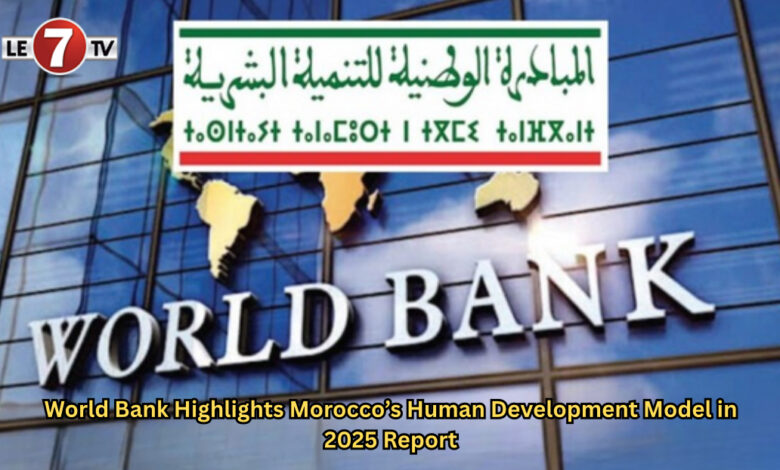
Released on Monday, September 15, in Washington under the title “Adopting and Shaping Change: Human Development in a Transforming MENA Region,” the report highlights the progress achieved by Morocco through the INDH, particularly in expanding access to early childhood services. It underscores the central role of this royal initiative in fighting poverty and improving living conditions for the most vulnerable populations.
During its third phase (2019-2023), backed by a budget of 18 billion dirhams, the INDH shifted its focus from infrastructure development to the provision of integrated services, with special attention to early childhood development.
The report also commends the “effective” partnerships between the public and private sectors, which have helped enhance outcomes in this area. Morocco’s programs supporting maternal and child health, nutrition, cognitive development, and efforts to reduce school dropout rates are cited as examples of integrated, well-coordinated services backed by stronger governance and sectoral quality.
The World Bank notes that the participatory and decentralized model of the INDH empowers local actors and ensures coherent action, drawing on reliable data. It also points to the initiative’s robust monitoring and evaluation system, including a digital dashboard compiling data from ministries and household surveys. This tool allows policymakers to identify priorities, guide interventions, and adapt services to community needs. A new phase of the program is set to launch in 2025, with enhanced support for local human development committees in data-driven planning.
The report further stresses the challenges posed by the green transition and climate risk management, while highlighting the job opportunities linked to sustainable growth. It estimates that Morocco’s growing reliance on renewable energy could generate around 28,000 jobs by 2030.
On the digital front, the World Bank observes that the rise of the online economy has opened up vast employment opportunities through digital platforms, with Morocco ranking among the leading contributors to the global online workforce.
Finally, the report points to Morocco’s integrated social and medical coverage registries as a key factor in improving the efficiency and reach of support programs, strengthening national resilience against future challenges.
Editorial team/le7tv