Anti-Doping: Cooperation Agreement Between AMAD, DGSN, and ADII on Investigations and Enforcement Enters Into Force
The cooperation and partnership agreement on investigations and enforcement in the fight against doping officially came into effect on Wednesday, with the aim of strengthening integrity and transparency in sports.

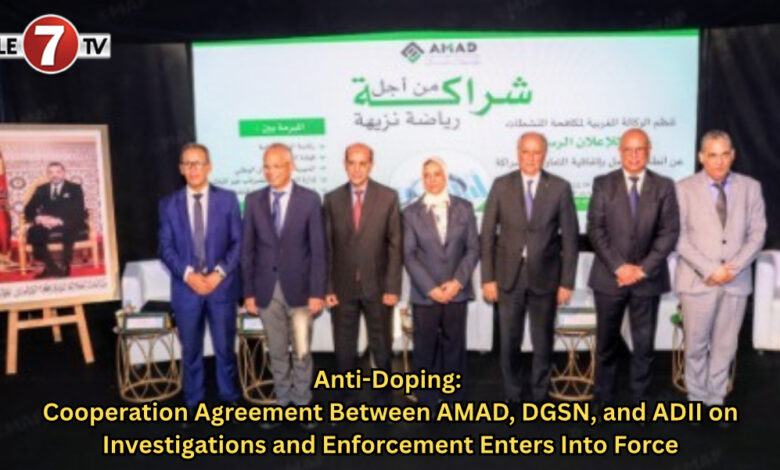
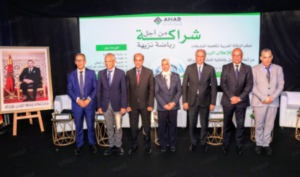
A ceremony was held in Rabat to mark the occasion, attended by representatives of the institutions involved in the agreement: the Moroccan Anti-Doping Agency (AMAD), the Presidency of the Public Prosecutor’s Office, the Royal Gendarmerie, the General Directorate of National Security (DGSN), and the Administration of Customs and Indirect Taxes (ADII).
The agreement seeks to pool the efforts of the public authorities concerned and ensure complementarity in their missions, with the objective of preventing and punishing offenses linked to the use of prohibited substances.
Speaking at the ceremony, Minister of National Education, Preschool and Sports Mohamed Saad Berrada said the agreement provides an integrated institutional framework for effectively combating doping through coordination, consultation, and information sharing. He reaffirmed his ministry’s commitment to enforcing Law 97-12 and implementing relevant international standards in order to ensure fair sporting practices and strengthen Morocco’s standing at the continental and international levels.
The minister also praised the creation of a joint commission of inquiry and investigation, tasked with monitoring the implementation of cooperation programs, proposing necessary technical adjustments, and drafting annual reports on the results of joint action. He stressed that this reflects a spirit of responsibility and transparency.
For his part, Hicham Balaoui, Attorney General of the King at the Court of Cassation and President of the Public Prosecutor’s Office, emphasized that the agreement demonstrates the determination of all signatories to join forces in addressing the challenges and difficulties related to doping in sport, at a time when Morocco is preparing to host major continental and international sporting events. He underlined that sport today represents more than a physical activity; it is an engine of economic growth, a tool for human development, a means of combating exclusion and marginalization, and a form of soft power for international influence.
Balaoui warned of the dangers of doping, noting that it undermines integrity, transparency, and fairness in competition, while also jeopardizing athletes’ health and careers and damaging the global reputation of sport.
Brigadier General Mouhsine Boukhabza, Head of the Central Service of the Judicial Police of the Royal Gendarmerie, highlighted the Gendarmerie’s contribution alongside other partners, particularly in terms of sharing operational experience. He added that involvement in the scientific and academic activities foreseen in the agreement will help strengthen the skills of judicial police officers. He stressed that the Gendarmerie is fully mobilizing its human and technical resources to combat criminal networks involved in trafficking illicit medicines, substances, and dietary supplements, while also enhancing the training of its personnel in investigative techniques and best practices for combating criminal activities that threaten public security and citizens’ health.
Redouane Ghazal, Head of Statistics and Strategic Analysis at the DGSN’s Judicial Police Directorate, stated that the DGSN has made anti-doping a priority in its 2022–2026 crime-fighting strategy. He underlined that the agreement between the DGSN, AMAD, and other partners reflects the DGSN’s openness to external collaboration and its total commitment to the fight against doping in sport, particularly through training initiatives, the exchange of expertise, and the development of joint training programs.
Fatima Abouali, President of AMAD, stressed that the agreement aims to unify efforts, exchange information, and organize training sessions in line with Law 97-12 and international standards. She described the signing of the convention as a key step toward establishing an integrated national system based on cooperation and trust, designed to prevent offenses, raise awareness of risks, safeguard the credibility of sporting competitions, and enhance Morocco’s image as a country committed to its international obligations in sports and anti-doping.
Abdellatif Amrani, Director General of the Administration of Customs and Indirect Taxes, underscored that the fight against doping is a collective national responsibility requiring the efforts of security, health, and sports institutions. He announced that the Customs Administration will launch a series of initiatives to make the fight against doping a national priority, in cooperation with institutional partners.
In remarks delivered on his behalf, he noted that these initiatives include training customs officers at border crossings to help them distinguish between legal medicines and banned doping substances, organizing specialized courses at the Customs Training Institute (IFD) in Benslimane for both new and active officers, and contributing to the creation of a specific customs classification for doping products to facilitate their identification and monitoring within the international control system.
Editorial team/le7tv