Ryad Mezzour: Morocco Enters a New Industrial and Technological Era
Morocco has reached a decisive milestone in its industrial rise. With the launch of construction on an integrated complex for full aircraft engine manufacturing, the Kingdom is affirming its ambition to become a leading technological and industrial power. This landmark project, according to Minister of Industry and Trade Ryad Mezzour, reflects the maturity and competitiveness of “Made in Morocco,” now synonymous with excellence, innovation, and sovereignty.

The third edition of National Industry Day, which opened Monday in Rabat, set the tone for this new dynamic. The three-day event brings together public and private stakeholders around a shared conviction: to make Morocco’s industrial fabric a sustainable model of performance and territorial integration. Organized by the Ministry of Industry and Trade in partnership with the General Confederation of Moroccan Enterprises (CGEM), the event celebrates a decade of industrial success driven by the visionary leadership of His Majesty King Mohammed VI.
In his address, Mezzour emphasized that the launch of the Safran aircraft engine complex represents “a historic milestone” for Morocco. The country is no longer limited to component assembly; it now manufactures entire engines, including the so-called “hot sections,” which are highly sophisticated and technologically advanced. This achievement propels the Kingdom into the select circle of nations capable of designing and producing complete aircraft engines.
The project crowns more than two decades of proactive industrial policies and illustrates the profound transformation of Morocco’s economic model. According to Mezzour, this success rests on three structural pillars: skills development, renewable energy, and public-private partnerships. Guided by the Royal Vision, these pillars have built an industrial ecosystem that is attractive, resilient, and internationally recognized.
The minister also noted that the Safran complex will have a major impact, expected to double Morocco’s aerospace exports—a sector that has already doubled in growth since 2021. Furthermore, 70 percent of the nation’s industrial capital is now held by Moroccan investors, a strong signal of economic autonomy and sovereignty.
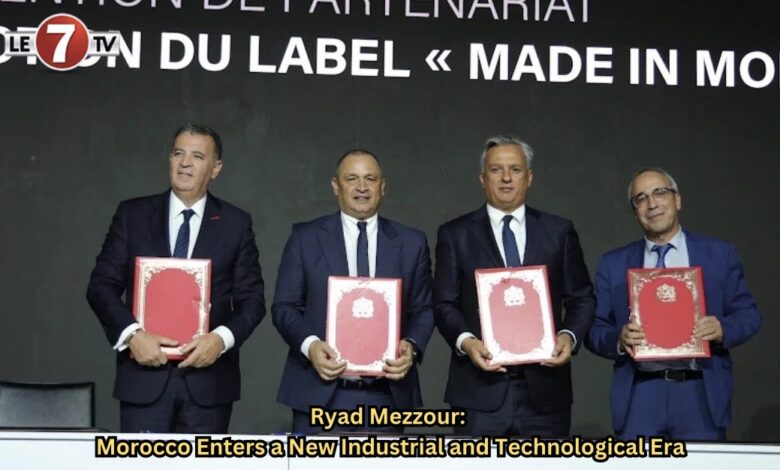
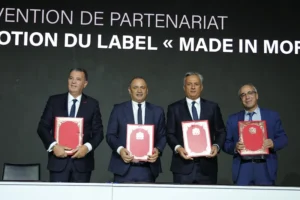
The theme of this edition, “Made in Morocco: A Mark of Quality, Competitiveness, and a Lever for Integrated Territorial Development,” resonates fully with this upward trajectory. On this occasion, the “Made in Morocco” excellence label was officially launched by the Moroccan Institute for Standardization (IMANOR). The label is based on a rigorous certification process—including document review, on-site inspections, and process verification—and distinguishes products with a local value-added share of at least 40 percent, ensuring authenticity and traceability.
For CGEM President Chakib Alj, this milestone crowns “twenty-six years of close cooperation between the public and private sectors.” In his words, “Morocco no longer merely participates in global value chains—it is becoming a strategic and indispensable player within them.”
National Industry Day 2025 was also marked by the signing of several key agreements involving the Ministry of Industry, the Ministry of Investment, the CGEM, IMANOR, the Department of Communication, and MarocPME. These partnerships aim to strengthen national competitiveness, consolidate industrial sovereignty, and promote the Moroccan label in international markets.
With this momentum, Morocco steps confidently into a new industrial era—driven by innovation, excellence, and confidence in its own talents. The Kingdom reaffirms, once again, that it is no longer just a production partner, but a rising industrial power capable of asserting its technological signature on the global stage.
Editorial team/le7tv