Algeria “Accepts” to Pardon Writer Boualem Sansal Under Pressure from the German President
Algeria has “accepted” to pardon writer Boualem Sansal, who has been imprisoned for nearly a year. Algerian President Abdelmadjid Tebboune “responded favorably” to a request from his German counterpart Frank-Walter Steinmeier “regarding the granting of a pardon for Boualem Sansal.”

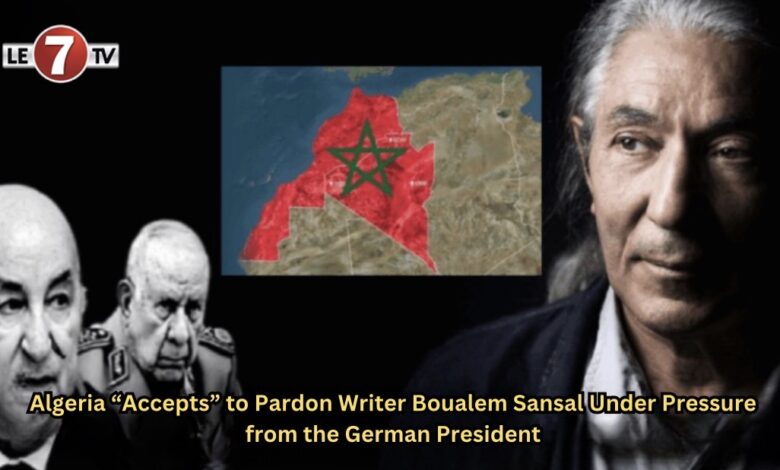
Sansal was arrested upon landing in Algiers while returning home. The Franco-Algerian author had been a frequent visitor to Algeria. On November 16, 2024, he was detained after having, a few weeks earlier, in October, questioned Algerian identity and the country’s western borders in an interview with Frontières, a far-right French magazine. His remarks turned him into an enemy of the military and the ruling elite—at the worst possible moment for him, as relations between France and Algeria were already strained over the Western Sahara issue. French President Emmanuel Macron had, in July 2024, publicly backed Morocco’s position, angering Algiers.
In France, Boualem Sansal received support mainly from right-wing and far-right circles, a form of backing that ultimately made his case even more sensitive for Algerian authorities, pushing them to remain firm.
A web of tensions between France and Algeria
The Sansal affair is only one piece of a broader diplomatic standoff. In spring 2024, before his arrest, Algerian authorities detained Christophe Gleizes, a French journalist, in Tizi-Ouzou, placing him under judicial control for alleged contact with a member of the Movement for the Self-Determination of Kabylie (MAK), classified as a terrorist organization by Algiers.
Then, in July, came Macron’s declaration in favor of Morocco regarding the Sahara, followed by Sansal’s arrest in November 2024.
In December 2024, new tensions arose after a documentary aired on Algérie 24, accusing France’s DGSE of seeking to destabilize Algeria.
In February 2025, an Algerian national carried out a terrorist attack in Mulhouse, prompting Paris to demand tighter enforcement of deportation orders (OQTF). The issue sparked a political standoff involving figures such as former French Interior Minister Bruno Retailleau, leading to a suspension of relations between the Algerian and French Senates.
In April 2025, several Algerians, including a consular official, were arrested in France in connection with the kidnapping of an Algerian blogger a year earlier. The incident led Algiers to expel 12 French officials, followed by France’s decision to recall its ambassador from Algiers. Algeria also suspended a 2013 visa exemption agreement for diplomatic passport holders and threatened to reconsider the 1968 bilateral accord regulating migration and residency between the two countries.
A pardon “at the request” of the German President
Boualem Sansal is well-known in Germany, where he received the Peace Prize of the Frankfurt Book Fair in 2011, one of the country’s most prestigious literary honors. At the time, German authorities praised his criticism of Algeria’s regime and his advocacy for freedom of expression, culture, and religion.
President Steinmeier also proposed that Sansal be transferred to Germany for medical treatment, citing his age and fragile health. The proposal framed the situation as humanitarian rather than political, allowing all parties to save face.
This “German option” had already been under consideration in July 2025, when speculation arose about a possible pardon during Algeria’s Independence Day celebrations. It is also worth noting that President Tebboune had traveled to Germany in 2020 and 2021 for medical treatment for COVID-19 and reportedly appreciated the discretion shown by German authorities.
In general, Algeria has maintained cordial relations with Germany, often viewing it as a neutral and pragmatic alternative to the more turbulent relationship it shares with France.
Editorial team/le7tv