COP30: All In for the Climate, Morocco Mobilizes the Power of Sport
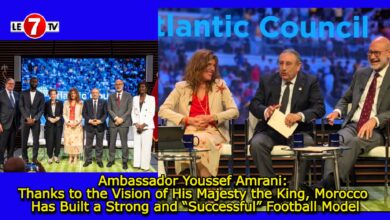
Can sport become a driver of climate action? On the sidelines of COP30, the Mohammed VI Foundation for Environmental Protection and the General Confederation of Moroccan Enterprises (CGEM) explored that question during a side event titled: “À fond pour le climat: mobiliser le sport au service de l’action climatique.”

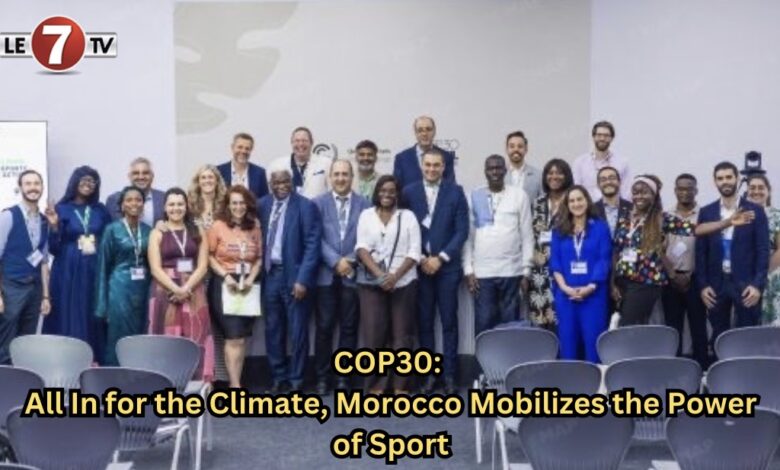
With the Africa Cup of Nations 2025 approaching and Morocco also preparing to co-host the 2030 World Cup with Spain and Portugal, the session highlighted the potential of sport to advance climate objectives in Africa, the Mediterranean and Latin America.
Local tournaments reducing waste, regional leagues promoting clean energy and youth-led initiatives were presented as pathways to amplify climate action through public policy, financing and cross-sector collaboration.
Speaking on behalf of the Mohammed VI Foundation for Environmental Protection, Ayman Cherkaoui, Executive Director of the Hassan II International Center for Environmental Training, recalled the Foundation’s commitment to supporting Morocco’s transformational development projects, in line with the vision of His Majesty King Mohammed VI and under the effective presidency of Her Royal Highness Princess Lalla Hasnaa.
He noted that the Foundation collaborated with the Royal Moroccan Football Federation (FRMF) on environmental aspects of the Bid Book submitted by Morocco, Spain and Portugal to FIFA.
Mr. Cherkaoui also emphasized the multiple intersections between sport and the environment: the environmental impact of infrastructure and competitions, the need to protect ecosystems to ensure sustainable access to sport, and the role of sport as a powerful tool for awareness thanks to its values and broad audiences.
Youssef Chaqor, Vice-President of the CGEM Africa Commission, noted that the Confederation, which gathers about 90,000 Moroccan companies, sees sport as a new strategic field to accelerate the climate transition. Both vulnerable to climate disruption and capable of influencing public behavior, sport can, he said, become a key lever to support climate policy and behavioral change.
He explained that the Moroccan private sector is already working on low-carbon infrastructure, sustainable mobility, circular waste management, increased renewable energy use and digital solutions to make stadiums smarter and more efficient.
He also highlighted available financing mechanisms, including green Public-Private Partnerships and Article 6 provisions, while underlining the role of sport as an educational tool and catalyst for youth climate engagement.
Rachid Tahiri, representing the Ministry of Energy Transition and Sustainable Development, warned of the growing vulnerability of the sports sector to climate disruption: extreme heat, rising sea levels threatening coastal sites and disrupted competition calendars. Sport, he reminded, also generates its own carbon footprint through transportation, energy use and logistics.
He underlined that Morocco now places sustainability at the core of its sports development, supported by modern infrastructure, a strong renewable energy mix and recognized expertise. Driven by His Majesty King Mohammed VI, this ambition aligns with Morocco’s NDC 3.0 roadmap and 2050 low-carbon strategy, reconciling decarbonization, competitiveness and territorial resilience.
He stated that the 2025 AFCON and 2030 World Cup represent an opportunity to demonstrate an African model of sustainable sport built on stadiums powered by clean energy, green mobility between host cities, circular waste systems and youth engagement.
Lindita Xhaferi-Salihu, Lead of Key Initiatives at the UNFCCC, presented the progress of the “Sports for Climate Action” program, recalling that sports organizations are expected to measure, reduce and report emissions in order to contribute to the global goal of limiting warming to 1.5°C in line with the Paris Agreement.
She also highlighted the integration of adaptation into the framework and urged sports stakeholders to strengthen the climate resilience of infrastructure and events.
Ms. Xhaferi-Salihu emphasized the framework’s five guiding principles: environmental responsibility, carbon reduction, climate education, sustainable consumption and responsible communication. She recalled the reduction trajectory: halving emissions by 2030 and reaching climate neutrality by 2040.
Niklas Hagelberg, Global Climate Coordinator at the UN Environment Programme (UNEP), stressed that federations and clubs hold significant leverage to transform consumption, energy systems and mobility models connected to sport.
He referred to the “Sports for Nature” initiative, co-championed by several organizations, which aims to reduce environmental impact, protect biodiversity and integrate sustainability into sports governance and event management.
Continuing on this theme, Cathy Yitong Li, Vice-Chair of the IUCN Climate Action Commission, presented the “Sports for Nature” framework and gave a broader view of global initiatives tied to the Climate Action Agenda, including the Marrakech Partnership.
Marcos Montoiro, Civil Society Liaison Lead at the UNCCD Secretariat, emphasized the link between sport, sustainable land management and the fight against desertification in arid and semi-arid regions, especially in Africa.
Edoardo Croci, Italian environmental expert, recalled that Italy will host the 2026 Milano-Cortina Winter Olympics. Sustainability, he said, will be central to both infrastructure and event management. He noted that Bocconi University is assisting the Italian Olympic Committee in assessing climate impacts.
Andrew Bowen, CEO of One Carbon World, discussed available climate finance avenues for the sports sector, including certified offset mechanisms and cooperation mechanisms provided under Article 6.
Laura Moraes, from the Brazilian initiative Earth Futball Club, presented the organization’s work using football as a tool for integrated environmental education. She highlighted the emotional importance of football in Brazil and explained how Earth Futball Club combines training sessions with climate workshops, community clean-ups and waste reduction projects, particularly in schools and local clubs.
Meanwhile, Carolina Monaco, Executive Director of Eco House Global (Argentina), stressed the importance of community-driven solutions built with youth participation. She presented the organization’s model based on civic engagement, hands-on training and field action, including waste management, public space restoration and climate awareness campaigns.
She also mentioned citizen science programs involving young people, as well as efforts to integrate sustainable practices in sports environments. Ms. Monaco highlighted the exceptional momentum in Argentina following its 2022 World Cup win, noting that this national enthusiasm offers significant potential to strengthen youth-led climate engagement.
Oladosu Adenike, Nigerian ambassador of the African Youth Climate Hub, recalled the importance of this initiative launched by Her Royal Highness Princess Lalla Hasnaa during the UN Secretary-General’s Climate Action Summit in 2019. She emphasized the decisive role of African youth in transforming sport and climate systems through awareness campaigns, mobilization and leadership programs.
Finally, Catarina Lorenzo, young Brazilian climate activist and professional surfer from Salvador (Bahia), closed the event. She paid tribute to Her Royal Highness Princess Lalla Hasnaa for advancing the link between sport and environmental action.
She explained that her own commitment began with surfing, a sport she has practiced since age two in a family of surfers. Spending most of her life in the ocean, she has observed firsthand alarming changes: coastal pollution and coral bleaching. She insisted on the need to include children, adolescents and youth in decision-making spaces, as today’s decisions directly shape their future.
She concluded with a message of hope, saying that surfing constantly reminds her that there is still life worth protecting despite threats to the ocean.
Editorial team/le7tv