Dakhla: The Need to Strengthen Prevention and Epidemiological Surveillance in Africa
Participants in the first African Summit on Health Systems and Health Sovereignty, held Friday in Dakhla, unanimously emphasized the need to strengthen prevention, develop integrated epidemiological surveillance systems and coordinate efforts in response to emerging and non-communicable diseases.

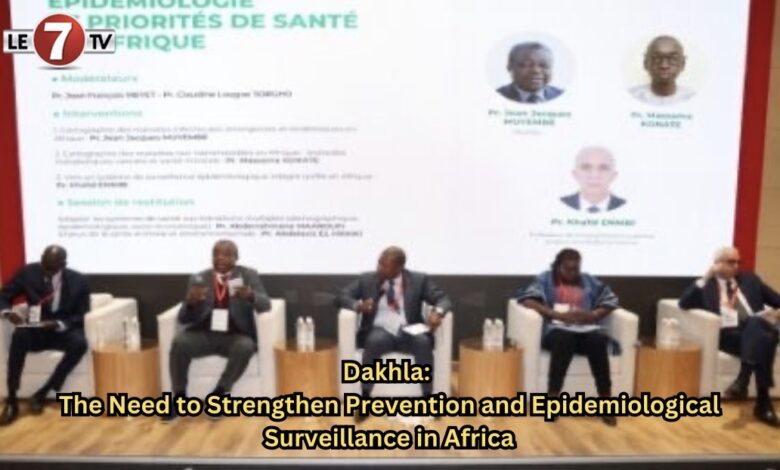
Speaking during a panel on epidemiology and health priorities in Africa, experts and health professionals noted that the scale of health risks requires a unified, forward-looking approach based on expanded scientific cooperation.
In this regard, Jean-Jacques Muyembe, Director General of the National Institute of Biomedical Research (INRB) in the Democratic Republic of Congo, warned about the resurgence of emerging infectious diseases, particularly Ebola and Mpox, recalling that zoonotic transmission remains high in sub-Saharan Africa because of ecosystem richness and the consumption of bushmeat as an essential protein source.
He pointed out that climate change and globalisation now contribute to the spread of vector-borne and waterborne diseases, in a context where health systems remain fragile.
For his part, Khalid Ennibi, Professor of Internal Medicine and Head of the Center for Virology, Infectious and Tropical Diseases at the Mohammed V Military Instruction Hospital in Rabat, highlighted the strategic importance of integrated epidemiological surveillance, currently adopted in more than 45 African countries. He explained that this approach aims to collect and analyse combined human, animal and environmental data to strengthen early detection of threats.
Referring to the historical development of these systems, he insisted on the urgency of accelerating the digitalisation of platforms, creating interoperable systems, developing a laboratory network and strengthening personnel capacity.
“The future of public health lies in systems that are connected, collaborative and predictive,” he said.
Meanwhile, Professor Massama Konate of the Faculty of Medicine and Odonto-Stomatology in Bamako presented a current overview of non-communicable diseases, which are responsible for 3.9 million deaths on the continent.
He explained that the rising prevalence of these diseases, amplified by demographic and epidemiological transitions, represents a major health burden affecting socio-economic development.
Despite progress made in access to healthcare, Professor Konate considered that substantial efforts are still needed, especially in sub-Saharan Africa. He called for coordinated action and stronger exchanges between scientists to sustainably improve the situation.
The first African Summit on Health Systems and Health Sovereignty began its work Friday in Dakhla, with nearly 200 African experts attending in person and 1000 participants joining remotely.
Initiated by the Mohammed VI Foundation for Science and Health (FM6SS), the Summit is part of the dynamic led by His Majesty King Mohammed VI in support of an African health sovereignty based on innovation, cooperation and capacity-building.
Editorial team/le7tv