PSG Crushes Inter Milan and Enters Football Legend!
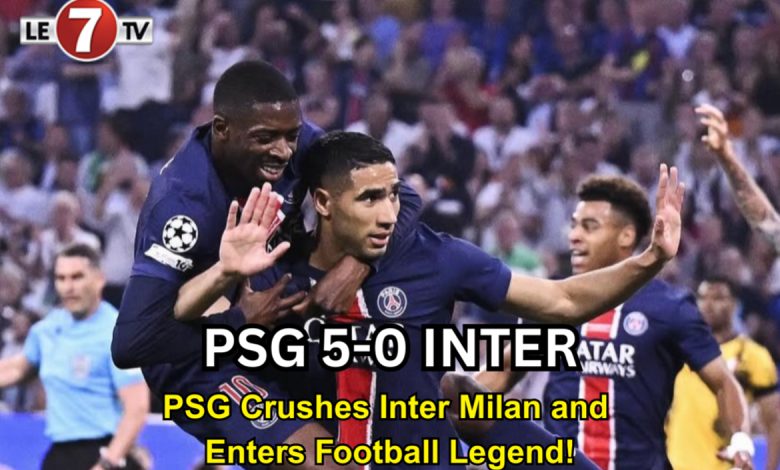
May 31, 2025 will forever be etched in the history of Paris Saint-Germain. After years of waiting, European disappointments, and missed opportunities, the capital club has finally laid its hands on the continental grail. And in what fashion! Facing a completely unrecognizable Inter Milan, PSG delivered a phenomenal performance, sealing an overwhelming 5–0 victory to win the first Champions League title in their history with unprecedented dominance.



From the opening moments, PSG set the tone. Dominant in every aspect of the game, Luis Enrique’s men dictated the pace and showed superior technique, leaving the Italian side quickly overwhelmed. Lined up in a familiar formation, PSG fielded a near-typical starting eleven—except for one key change: the young Désiré Doué started over Barcola. A bold move that paid off.
The first goal came early. In the 12th minute, Vitinha found Doué in the box, who perfectly set up Hakimi for the opening goal. Just eight minutes later, a lightning-fast counterattack led by Dembélé ended with Doué firing a slightly deflected shot past Sommer, making it 2–0. The Parisian steamroller was in motion.
By halftime, the score could have been even more severe. Paris suffocated Inter, whose only real attempt was a wayward header from Thuram. Meanwhile, Doué and Dembélé kept threatening, coming close to a third goal on multiple occasions.
The second half continued in the same vein. Kvaratskhelia missed two clear chances, but it was only a matter of time. In the 63rd minute, a devastating counter led by Dembélé and Vitinha allowed Doué to net his second goal, confirming his status as man of the match.
What followed was sheer domination. PSG played with irresistible collective inspiration. In the 73rd minute, Kvaratskhelia, brilliantly set up by Dembélé, beat Sommer to make it 4–0. The humiliation became historic.
Substitute Barcola dazzled in the final minutes, gliding past Acerbi before assisting Mayulu, who added the fifth goal in the 87th minute. The stadium erupted as fans roared with joy, chanting “Olé” with every PSG pass.
It was a flawless night—a dream realized. By winning the Champions League final in such emphatic fashion, Paris Saint-Germain didn’t just add their name to the list of champions—they made history in indelible ink. A true apotheosis.