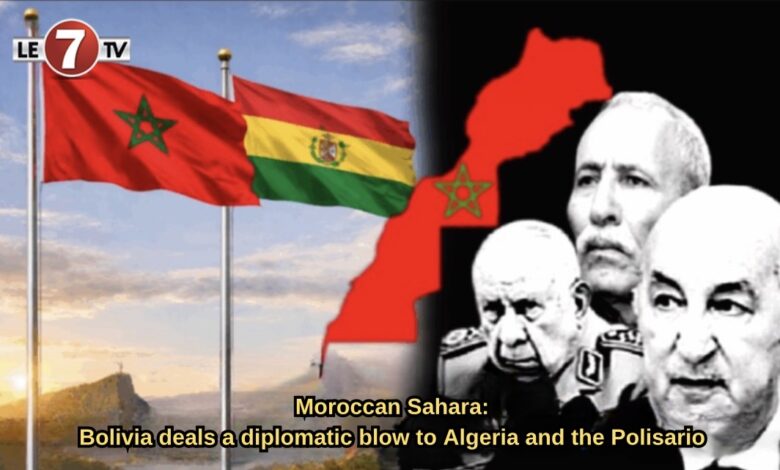
Moroccan Sahara: Bolivia deals a diplomatic blow to Algeria and the Polisario
Bolivia’s decision to suspend its recognition of the so-called “rasd” is not merely a diplomatic adjustment. It forms part of a broader geopolitical sequence that is gradually reshaping the balance around the Moroccan Sahara issue and putting pressure on the international strategy pursued for decades by the Algerian military leadership.

A gradual erosion of Algeria’s diplomatic base
In recent years, the number of states maintaining active recognition of the so-called “rasd” has declined. In Latin America, long considered a diplomatic stronghold favorable to the Polisario, positions have begun to evolve under the influence of three main factors:
- The renewed centrality of the UN framework.
- Morocco’s growing diplomatic and economic influence.
- The search by Latin American states for pragmatic strategic partnerships.
By recalling that the entity referred to as “rasd” is not a member of the United Nations and reaffirming its commitment to UN Security Council Resolution 2797 (2025), Bolivia sends a clear signal: the era of ideological recognitions is giving way to diplomatic realism.
Officially, Algeria maintains that it is not a party to the conflict. In practice, however, the country remains the Polisario’s main political, diplomatic, financial and logistical supporter. The movement’s infrastructure, international representation and political survival depend largely on Algerian backing.
Bolivia’s suspension therefore directly affects Algeria’s regional strategy. Each withdrawal or freeze of recognition weakens the diplomatic leverage used by Algeria to internationalize the issue.
The paradox is striking. While Algeria frequently invokes international law, the international dynamic appears increasingly centered on the UN process, a framework that favors a negotiated and realistic political solution rather than automatic recognition of an entity that is not a UN member.
Morocco strengthens its alliances in Latin America
Latin America was long an area of influence favorable to the Polisario, particularly during periods marked by governments ideologically aligned with Third Worldist positions.
Today, the region is undergoing a phase of strategic recomposition. Economic, energy and trade priorities increasingly outweigh symbolic alignments. Morocco, with its African positioning and proactive economic diplomacy, is increasingly seen by several Latin American capitals as a structured partner rather than a peripheral actor.
Bolivia’s decision illustrates this shift. It reflects a diplomatic rebalancing in favor of a pragmatic approach and an openly assumed bilateral partnership with Rabat.
Growing isolation for Algeria
For Algeria, the multiplication of suspended recognitions raises a deeper strategic question: whether to maintain a costly diplomatic confrontation or to reassess its positioning in a rapidly changing international context.
Support for the so-called “rasd” has been a central marker of Algerian foreign policy for decades. Yet as recognitions decline and more states prioritize solutions framed by the United Nations, the diplomatic cost of maintaining a rigid stance continues to rise.
A battle now shaped by geopolitical realism
The Moroccan Sahara issue is no longer structured solely by ideological solidarities inherited from the Cold War. It is increasingly influenced by considerations of regional stability, security, investment and economic integration.
In this new context, states are reassessing their priorities. Bolivia’s decision symbolizes this shift: political recognition is gradually giving way to strategic pragmatism.
For Algiers, the message is clear. The international dynamic is evolving, and every suspension of recognition further reduces the Polisario’s diplomatic space. The issue is no longer merely legal or symbolic. It has become geopolitical and strategic.
Translated from Abderrazzak Boussaid’s French article – le7tv