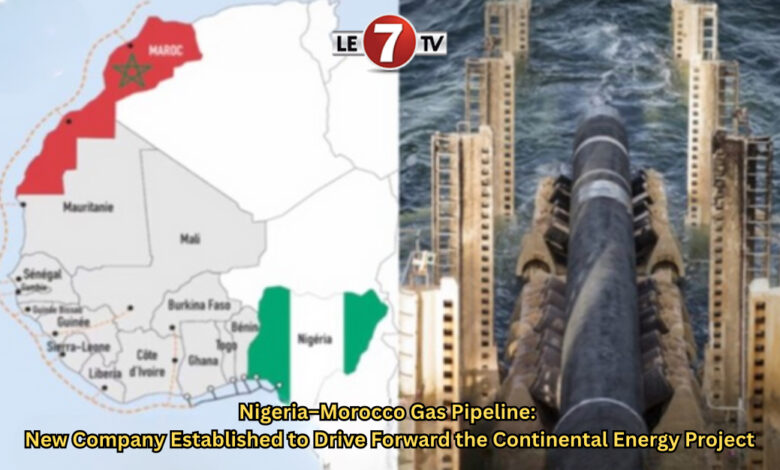
Nigeria–Morocco Gas Pipeline: New Company Established to Drive Forward the Continental Energy Project
The strategic partnership between Morocco and Nigeria has reached a decisive new milestone with the official creation of a company tasked with overseeing and coordinating the development of the monumental Nigeria–Morocco gas pipeline — one of the most ambitious energy projects ever launched in West Africa. Estimated at nearly $25 billion, this continental-scale undertaking is set to accelerate implementation and strengthen international financing efforts, according to the Nigerian daily The Guardian.

For Amina Benkhadra, Director-General of the National Office of Hydrocarbons and Mines (ONHYM), this step represents “a decisive advancement in the financial and technical structuring of the project,” offering greater visibility for its rollout.
Stretching over approximately 6,000 kilometers, the future pipeline will run along the Atlantic coast of West Africa, with a transport capacity ranging between 15 and 30 billion cubic meters of gas per year. Thirteen coastal countries — representing nearly 400 million inhabitants — will directly benefit from the project, while several landlocked nations such as Niger, Burkina Faso, and Mali will also be connected to the network. At its northern end, the infrastructure will link up with the Maghreb–Europe pipeline, providing Nigerian gas with direct access to European markets.
The technical studies, completed in mid-2025, confirmed the final route of the pipeline. From an organizational standpoint, governance will be based on a parent company supported by regional subsidiaries responsible for specific sections of the route — a model endorsed by ECOWAS, further consolidating the project’s institutional legitimacy.
The initiative continues to attract new partners. In July, Togo officially joined the venture alongside the Nigerian National Petroleum Company (NNPC), Morocco’s ONHYM, and the Togolese national company SOTOGAZ. Several major financial institutions are already backing the project, including the European Investment Bank, the Islamic Development Bank, the OPEC Fund for International Development, and the United Arab Emirates, as recently announced by Morocco’s Minister of Energy Transition, Leila Benali.
The newly established company will coordinate financing and prepare the final investment decision by the end of 2025. As a true energy backbone for the continent, the Nigeria–Morocco gas pipeline aims to revolutionize energy access across West Africa, strengthen regional energy security, and establish a strategic corridor linking Africa to Europe.
Editorial team/le7tv