Tindouf Camps: Morocco Denounces a “Humanitarian Anomaly” and Calls for the Immediate Registration of Detainees by UNHCR
Morocco strongly denounced on Tuesday in Geneva what it described as a “flagrant humanitarian anomaly” that has persisted for fifty years in the Tindouf camps in southwestern Algeria. The Kingdom urged the United Nations High Commissioner for Refugees (UNHCR) to fully assume its mandate, particularly by ensuring the independent and immediate registration of the populations held there and guaranteeing free and unhindered humanitarian access to the camps.

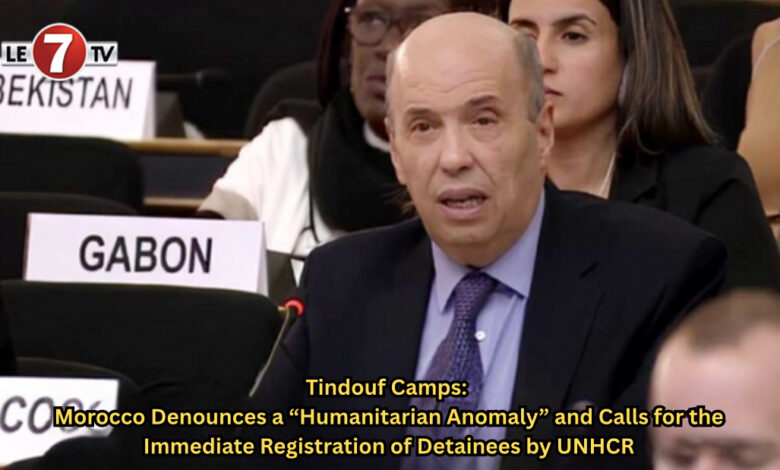
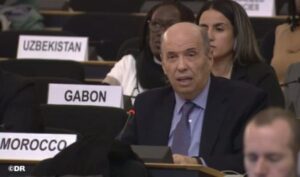
“Humanitarian neutrality must never be confused with passivity in the face of injustice,” declared Morocco’s Permanent Representative to the UN in Geneva, Ambassador Omar Zniber, during the general debate of the 76th session of the UNHCR Executive Committee.
The Moroccan diplomat warned against the consequences of continued international inertia, denouncing a situation he described as “abnormal and unprecedented in the history of the UNHCR” — one that has endured for half a century. He emphasized the need to “strictly uphold” fundamental humanitarian principles, including neutrality, impartiality, transparency, accountability, and the civilian nature of refugee camps.
Zniber underscored the urgency of conducting an “independent and immediate registration” of the populations detained in Tindouf, recalling that this recommendation was first issued in 2005 by the UNHCR’s Office of the Inspector General, yet remains “unimplemented” twenty years later.
“Every resource mobilized must contribute to a durable solution and never be diverted from its humanitarian purpose,” he continued, calling for stronger monitoring and accountability mechanisms to ensure that all aid provided reaches its intended beneficiaries.
The ambassador also voiced Morocco’s concern over the lack of free humanitarian access to the camps and the violation of their civilian character. He reaffirmed that the Kingdom of Morocco “remains a land of asylum and a committed humanitarian actor,” having adopted a humanist migration policy supported by solid legal and institutional frameworks. Morocco, he added, continues to contribute to international humanitarian aid, including through the UNHCR.
The Kingdom expressed hope that the principles of responsibility, transparency, and shared accountability will continue guiding the UNHCR’s work, urging the agency to enhance its operational efficiency and foster greater involvement of member states in its decision-making processes.
During this 76th Executive Committee session, Morocco reiterated its “deep attachment to the principles and values underpinning international humanitarian action and to the central role of the UNHCR in this regard.”
“In a global context where over 120 million people have been displaced from their homes, our collective responsibility — and that of the UNHCR — is to intensify efforts to deliver responses that uphold human dignity and meet our legal and moral obligations,” Zniber concluded.
In response, UN High Commissioner Filippo Grandi reaffirmed his commitment to maintaining the non-political nature of refugee protection.
“I reiterate the urgency and importance of reaching a political solution to this situation, which has lasted far too long,” he said, referring to the Sahara issue before the UN Security Council.
“At the same time, we will remain engaged in the humanitarian response in Tindouf and will remain vigilant about preserving the civilian character of the camps,” he assured.
Editorial team/le7tv