Burundian Delegation Explores Morocco’s Human Rights Council Experience in Monitoring and Capacity Building
A delegation from Burundi’s Independent National Commission on Human Rights is currently visiting Morocco to learn from the experience of the National Human Rights Council (CNDH) in areas such as monitoring, complaint handling, and capacity building.

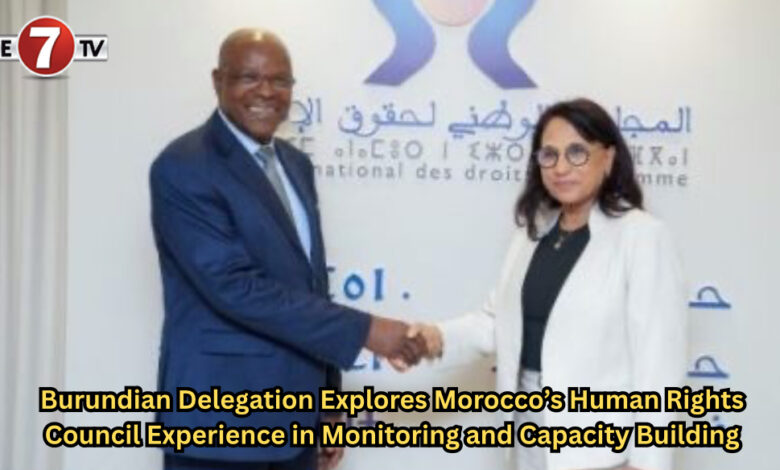
The CNDH is hosting the Burundian delegation from October 8 to 14. The visit is led by Commission President Martin Blaise Nyaboho, accompanied by Vice President Gérard Rugemintwaza, Executive Secretary Béatrice Nkurunziza, and members Gloriose Nimenya and Jean Bosco Manirambona.
According to a CNDH statement, this initiative reflects the Council’s ongoing commitment to sharing its expertise and best practices with its African counterparts.
Speaking at the opening of a week-long study program in Rabat, Mr. Nyaboho emphasized the importance of strengthening cooperation between the two countries’ national human rights institutions, particularly through the exchange of expertise in protection, monitoring, complaint management, and capacity building for human rights actors. He also highlighted Morocco’s advanced experience and efforts in promoting human rights.
For her part, CNDH President Amina Bouayach described Morocco’s human rights model and the Council’s work as “a fully-fledged African experience” that the Kingdom is proud to share with other defenders of human rights across the continent.
She welcomed this new step in bilateral cooperation, aimed at promoting mutual learning and developing joint initiatives that contribute to the advancement and protection of human rights in Africa.
Bouayach further stressed that sharing the CNDH’s experience and learning from others is a key pillar for strengthening the role of African national institutions and enhancing their engagement with international human rights mechanisms.
During their visit, the Burundian representatives will learn about the CNDH’s missions and operations, including human rights protection, monitoring of violations, complaint-handling systems, communication and human rights education strategies, and interaction with international mechanisms—particularly regarding accreditation with the Global Alliance of National Human Rights Institutions (GANHRI).
The program also includes meetings with Moroccan civil society organizations active in the human rights field, as well as a field visit to the CNDH’s Regional Commission in Tangier-Tetouan-Al Hoceima, where the delegation will explore the regional implementation of the Council’s work.
Editorial team/le7tv