Abdessamad Kayouh: The Development of Morocco’s Transport and Logistics Sectors Shows Positive Indicators
The development of Morocco’s transport and logistics sectors has shown positive indicators, said the Minister in charge, Abdessamad Kayouh, on Thursday in Rabat.

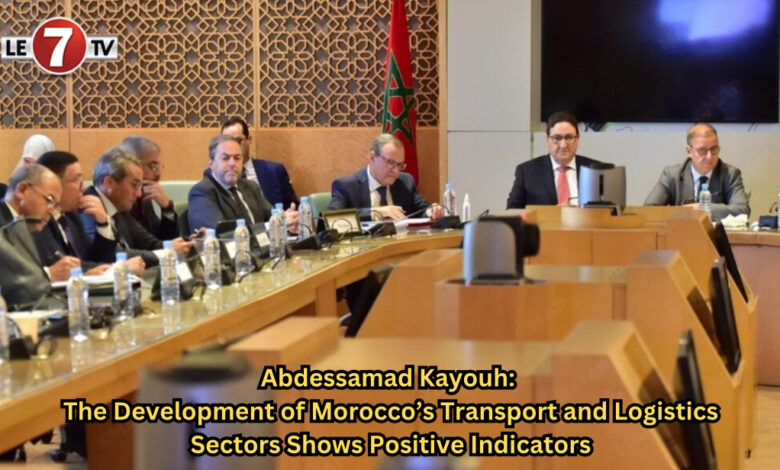
Presenting his department’s draft sectoral budget before the Committee on Infrastructure, Energy, Mines, Environment and Sustainable Development at the House of Representatives, Mr. Kayouh noted that the turnover of the National Railways Office (ONCF), for example, has seen significant growth in recent years, exceeding 4.7 billion dirhams in 2024 compared to 3.63 billion dirhams in 2021, with projections of more than 5 billion dirhams in 2025.
This growth, he explained, reflects the increased demand for ONCF services, improvements in the quality of rail transport, and the expansion of the network. He added that this evolution is also linked to the promotion of phosphate and freight transport, which boosts the Office’s revenues and its capacity to invest in new projects.
Furthermore, the National Airports Office (ONDA) recorded a notable improvement in its financial performance over recent years, with turnover rising from about 3.3 billion dirhams in 2021 to nearly 5.4 billion dirhams in 2024 — an increase of more than 60% in three years and an annual jump of around 14% compared to 2023.
Operating profit, he continued, reached 1.9 billion dirhams, while self-financing capacity approached 1.2 billion dirhams, marking an increase of around 8%.
As for the National Company for Transport and Logistics (SNTL), Mr. Kayouh highlighted that it has regained its dynamism and performance, with a turnover of 712.1 million dirhams, up more than 5% compared to 2023. This, he said, reflects greater efficiency in managing the company’s various activities, both in transport and logistics services, as well as continuous improvement in its financial position.
During their interventions, majority parliamentarians praised the content of the draft sectoral budget in terms of figures, indicators, and concrete measures aimed at upgrading the sector and implementing a clear roadmap, within the framework of the ministry’s participatory approach to promoting transport and logistics.
They stressed that Morocco will host two major sporting events — the Africa Cup of Nations and the FIFA World Cup — which will require strong support from the transport and logistics sectors, as well as other ministries, through modern and suitable infrastructure and equipment, and the availability of various transport modes.
They also welcomed the improved performance of the sector (rail, air, and maritime transport), which demonstrates its resilience to various shocks.
Moreover, they emphasized the importance of allocating sufficient budgets to this sector to complete the implementation of the 2022-2026 strategic plan, strengthen its competitiveness, contribute to the desired economic growth, and improve service quality in light of the challenges ahead.
For their part, opposition MPs argued that the resources allocated to the transport and logistics sector fall short of expectations and ambitions, pointing to a shortfall in the sectoral budget, particularly in rail transport, given the priorities outlined in the 2026 Finance Bill, especially concerning the strengthening of territorial equity.
They stressed that rural areas, in particular, need more alternative solutions to address the issue of “illegal transport,” which continues to affect rural populations. Such solutions, they said, are necessary to provide suitable transport options, promote local economic activity, and ensure access to quality social services.
They further noted that the draft sectoral budget lacks “specific details and realistic performance indicators” regarding the program to renew the fleet of road transport vehicles, which is part of efforts to modernize and upgrade the fleet and improve road safety.
Editorial team/le7tv