AFCON Final Incidents: CAF Disciplinary Committee to Meet This Tuesday to Rule on Possible Sanctions
The Confederation of African Football is preparing to examine one of the most sensitive cases in the recent history of the Africa Cup of Nations. Initially scheduled for Sunday, the meeting of the disciplinary committee tasked with ruling on the incidents that occurred during the Morocco–Senegal final was postponed to this Tuesday, at the request of the Senegalese Football Federation, which asked for additional time to prepare its defense.

This postponement is accompanied by a procedural measure aimed at guaranteeing the impartiality of the disciplinary body: the Senegalese president of the disciplinary committee has been temporarily removed from the examination of the case, in accordance with CAF internal rules in situations involving a risk of conflict of interest. The stated objective is to preserve the credibility of the process and the neutrality of the forthcoming decision.
The disciplinary review is taking place in a particularly tense climate, fueled by public statements from Senegalese officials accusing Morocco and the continental body. These allegations have generated strong media controversy but, when examined against the facts, struggle to rely on tangible elements.
From a logistical and organizational standpoint, the Senegalese national team’s stay in Morocco took place under conditions consistent with CAF standards. Accommodation, transportation, training facilities, security and ticketing were the result of choices validated or directly made by the Senegalese federation, with no official incidents reported at the time. No major disturbance or security failure was established during this phase.
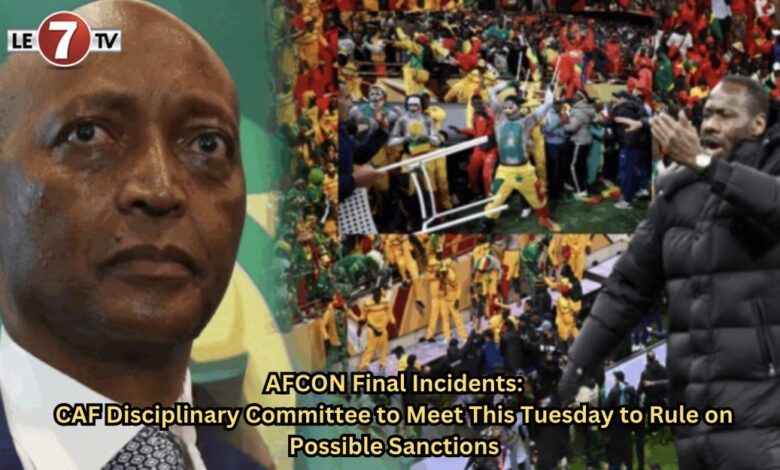
The core of the case therefore remains what occurred during the final itself. This match, meant to be the pinnacle of African football, was marked by prolonged refereeing protests, an unusual interruption, the temporary withdrawal of Senegalese players to the dressing rooms, and rising tension in the stands. These events led the CAF to open a formal disciplinary procedure, based on officials’ reports, video footage and the regulations in force.
Present at the stadium, the FIFA President publicly condemned the scenes observed, recalling the inviolable nature of refereeing decisions and the need to respect the rules, especially during a continental final. The CAF, for its part, confirmed that the case would be handled exclusively on the basis of established facts and disciplinary law.
The regulations are clear. CAF rules provide for severe sanctions in cases of refusal to play or abandonment of the field without authorization, ranging from a forfeit loss to heavier disciplinary measures. The committee will have to determine whether the facts observed fall within this specific legal framework.
The decision expected this Tuesday goes beyond the fate of a single match. It will engage the credibility of the continental body, the authority of its regulations, and the ability of African football to manage crises without yielding to political or emotional pressure. More than the verdict itself, it is the rigor, coherence and transparency of the procedure that will make it possible to close this case without leaving a lasting shadow over the Africa Cup of Nations.
Translated from Abderrazzak Boussaid’s French article – le7tv