Gaza: Morocco outlines its security, humanitarian and financial contribution at the Peace Council
Meeting on February 19 in Washington, the Peace Council initiated by Donald Trump devoted its first session to the reconstruction and stabilization of Gaza following the conflict. On this occasion, Morocco was cited among the few Arab states to publicly commit on the security front, in addition to a financial contribution. During this inaugural meeting, participants discussed the establishment of an international stabilization force aimed at securing the delivery of humanitarian aid and supporting the administration of the territory during the post-conflict phase. Morocco would join this mechanism alongside several countries, including Indonesia, Kazakhstan, Kosovo and Albania.

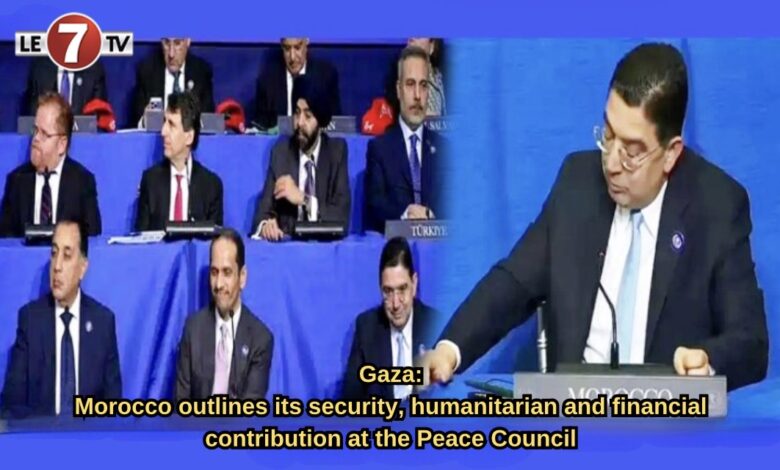
A multidimensional Moroccan contribution:
Morocco presented the main pillars of the Kingdom’s engagement. These include a financial contribution described as the first official pledge to the mechanism, the training and deployment of Gaza police officers, as well as the sending of senior officers to the command structure.
The Kingdom also plans to install a military field hospital to support local health services and to implement a program aimed at preventing extremism, promoting coexistence and combating hate speech.
Some estimates reported by the media mention the possibility of a contingent reaching several thousand soldiers, with an initial potential deployment near Rafah. In the longer term, around 12,000 police officers could be mobilized.
Financing and diplomatic dimension:
According to several international media sources, the United States would be the main financial contributor to the project, with several billion dollars reportedly allocated. An additional funding package is said to have been assembled by a group of partner states including Morocco and several Gulf countries.
Rabat openly assumes this position, highlighting its willingness to support the American initiative. Analysts believe that this participation reflects a diplomatic strategy aimed at strengthening the Kingdom’s relations with its Western partners, while maintaining its traditional role as a defender of the Palestinian cause.
A potential mediating role:
This involvement could strengthen Morocco’s diplomatic standing on the regional stage. Morocco had already normalized its relations with Israel within the framework of the Abraham Accords and presides over the Al-Qods Committee of the Organisation of Islamic Cooperation, which gives it a particular position in matters related to Jerusalem and the Palestinian issue. The Moroccan engagement, combining security, humanitarian aid and financing, illustrates an active diplomatic strategy that could place the Kingdom at the center of international efforts to stabilize Gaza.
Editorial team/le7tv