Morocco Committed to Establishing African Model Combining Peace & Development – Upper House Speaker
Rabat - Speaker of the House of Councillors Mohamed Ould Errachid highlighted on Wednesday in Rabat Morocco’s unwavering commitment, under the leadership of His Majesty King Mohammed VI, to establishing an African model that combines peace and development.

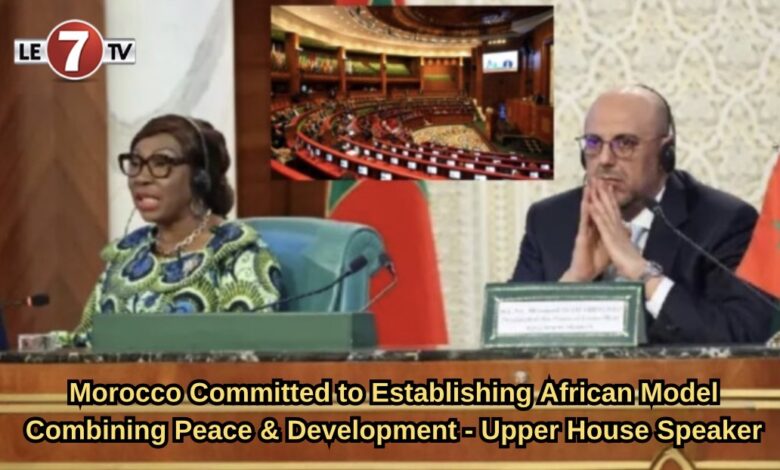
In a speech at the opening of the Conference of the Association of African Senates, Ould Errachid noted that the Kingdom has established, through over 50 Royal visits to African countries—culminating in the signing of hundreds of strategic agreements—a renewed approach to South-South cooperation based on productive investment, the transfer of expertise, and the creation of partnerships on an equal footing.
This meeting, he noted, comes “at a time when our Association’s activities are moving toward greater regularity and closer ties among African upper Houses,” as a natural extension of Morocco’s commitment, under the leadership of His Majesty the King, to supporting joint African action and promoting solidarity and integration among the peoples of the continent.
In this context, Ould Errachid recalled the content of the Royal message addressed to the participants in the 5th edition of the Crans Montana Forum in Dakhla, in which the Sovereign affirmed that “Morocco’s commitment to Africa and to active South-South cooperation is not dictated by circumstances, or by narrow interests. Since my accession to the throne, I have been advocating for an active, fraternal and mutually beneficial form of solidarity. Indeed, I consider that serving Africa – our Continent – is not only our duty and responsibility, it is also our chance.”
According to the Upper House Speaker, Senates and upper Houses enjoy broad representation, which allows for integrating territorial, social, economic, and professional dimensions into public debate, thereby strengthening the stability and cohesion of societies.
“If these roles give Senates and upper Houses a prominent place within the constitutional and institutional framework, it is because they are, at their core, linked to broader issues related to the consolidation of democracy and the establishment of the political and institutional conditions necessary for development and peace,” he argued.
On this occasion, Ould Errachid expressed the hope that the Conference would mark an important milestone in our Association’s journey, both through the Rabat Declaration—which will conclude the collective debate on the role of upper Houses in enshrining democracy and preserving peace—and through practical recommendations arising from sharing experiences and best practices in parliamentary work.
Editorial team/le7tv