United Kingdom: Moroccan scientist Mimoun Azzouz honored for major advances in gene therapy

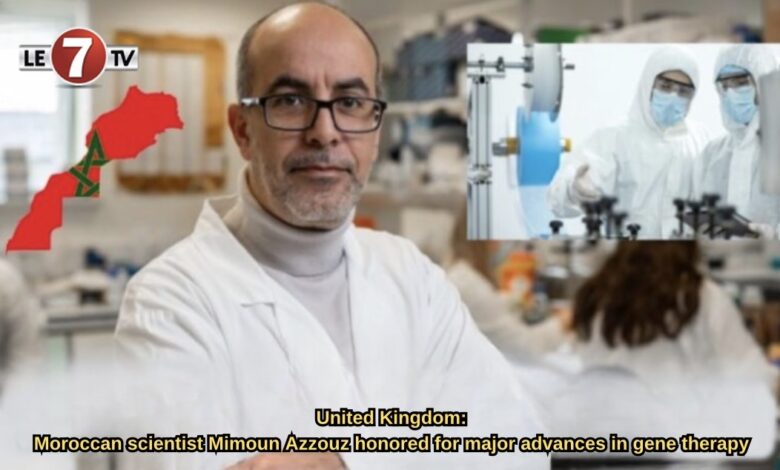
Moroccan professor Mimoun Azzouz, who heads the Gene Therapy Innovation and Manufacturing Centre (GTIMC) at the University of Sheffield, 270 kilometers north of London, has been honored by the British Society for Gene and Cell Therapy, which awarded him its prestigious Outstanding Achievement Award in recognition of his major contributions to research and training in the advanced field of gene therapy.
Also a professor of translational neuroscience at the University of Sheffield, the Moroccan researcher has established himself as a leading figure in the development of innovative therapies for neurological diseases.
His work focuses in particular on transforming fundamental discoveries into practical treatments, helping bridge the gap between laboratory research and human clinical trials.
Since 2006, Professor Azzouz has secured more than £34 million in research funding and led pioneering studies in the field. His team was notably the first to demonstrate the effectiveness of a gene therapy targeting the SMN gene in spinal muscular atrophy models, paving the way for groundbreaking human clinical trials and the later approval of a treatment.
In an interview with MAP, Professor Azzouz said the award represents “a source of pride” for him and for his research teams in Sheffield. He noted that it reflects years of teamwork, scientific effort and research.
He described the distinction as recognition of long-term work in gene therapy, particularly discoveries and research into medicines and treatments for spinal muscular atrophy affecting infants, as well as Parkinson’s disease.
Regarding his research in these areas, Professor Azzouz said he currently leads a network of 34 institutions and companies across Europe aimed at advancing work in this highly specialized scientific field.
The Moroccan professor is also distinguished by his commitment to training young researchers, an effort he described as “exciting.” He has been active in this field for nearly 30 years, having begun his scientific journey in Lausanne, Switzerland, in 1997.
As part of this mentorship mission, he advocates perseverance and encourages young researchers to contribute to projects of major importance in a sector vital to public health.
From Sheffield, where he continues his research, Professor Azzouz expressed strong optimism about the future of scientific research in Morocco.
“Morocco has enormous potential in research,” he said, recalling that he helped train a group of Moroccan researchers to support projects in science and healthcare.
He added that other groups are emerging in different disciplines, stressing that Morocco is well positioned to further develop scientific research. He pointed to important research being carried out by centers and universities in the country, citing the example of Mohammed VI Polytechnic University in Benguerir.
A scientific entrepreneur, Professor Azzouz founded the company BlackfinBio and co-founded Crucible Therapeutics. He also leads a European consortium worth €25.5 million, bringing together 34 partners to accelerate the development of advanced therapies.
Thanks to his ability to secure significant funding, Professor Azzouz also founded the UK Gene Therapy Innovation and Manufacturing Centre, strengthening the British ecosystem in this cutting-edge field.
At the same time, he has contributed to training the next generation of researchers, supervising 81 scientists, including 20 doctoral students.
The distinction awarded by the British Society for Gene and Cell Therapy highlights the remarkable journey of a Moroccan researcher whose scientific and medical impact now resonates on an international scale.
Editorial team/le7tv