Sahrawi Movement for Peace Calls on UN Secretary-General to Ensure Its Inclusion in Political Process to Prevent a New Collapse
In a letter addressed to the UN Secretary-General, the First Secretary of the Sahrawi Movement for Peace (MSP) drew Antonio Guterres’ attention to “the crucial moment that the Western Sahara file is experiencing and the urgent need for a new approach capable of truly bringing positions closer together and opening the way to lasting peace.”

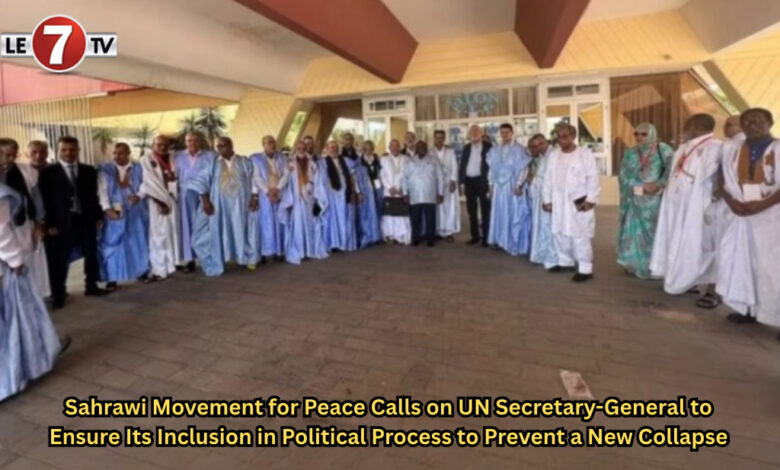
He emphasized that “the current context, marked by growing instability in the Sahel and North Africa, demonstrates how essential the resolution of this conflict has become for the security and prosperity of the entire region.” The letter also notes that “the current trend of influential powers, particularly the United States, seems to be oriented towards seeking a settlement that prioritizes regional stability at all costs.”
Regarding Sahrawi participation, the letter states: “The MSP, faithful to its commitment to peace and dialogue, reaffirms that it is time for the United Nations to broaden the circle of Sahrawi participation.”
The First Secretary affirmed: “It is no longer possible to ignore the voice of the silent majority, tired of divisions, exile, and war. The MSP, carrying a third Sahrawi path, proposes a path of compromise—a path of reason and realism, capable of preserving the dignity of the Sahrawi people without compromising regional stability.”
The letter continues: “I pray Your Excellency to encourage your Personal Envoy to present an innovative, more credible and inclusive proposal, integrating the diversity of Sahrawi forces and voices, including that of the MSP. The future of the peace process will depend on its ability to bring together and expand Sahrawi representation, not to exclude or submit to the monopoly of a single voice.”
On the nature of peace, the MSP underlines: “The Sahrawi Movement for Peace remains convinced that true peace cannot be imposed either by force or by the monopoly of a single voice, but that it must be built through the inclusion of other opinions and mutual respect.”
Finally, the First Secretary highlighted: “It is imperative that the revitalization of the political process remain within the United Nations framework and that the management of its Personal Envoy demonstrate the flexibility and boldness necessary to include other Sahrawi sensitivities, such as that represented by the MSP, whose approach and commitment to a compromise solution could be decisive in escaping the deadlock and preventing a new collapse that would compromise the centrality of the UN.”
Editorial team/le7tv