Al Jazeera, a propaganda tool serving the Algerian regime, steps up coordinated and repetitive attacks against Morocco’s territorial integrity and strategic interests
For several years, the Qatari channel Al Jazeera has been methodically working to spread a distorted, biased, and manipulated image of the issue of the Moroccan Sahara. Under the guise of “information” and “pluralism of viewpoints,” the channel has drifted into blatant media activism aligned with the geopolitical interests of Algeria’s military junta and its terrorist proxy, the Polisario.

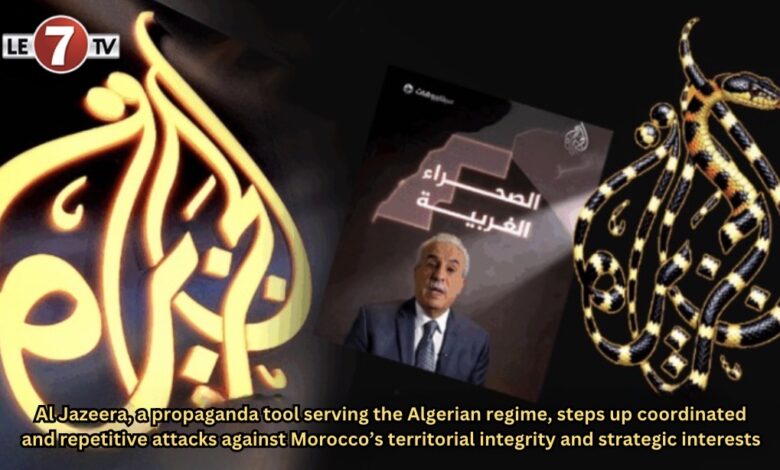
This partisan stance is no longer part of a simple journalistic debate. It is part of an organized influence campaign directly targeting Morocco’s territorial integrity and its strategic, economic, and political interests.
An openly pro-Algerian propaganda strategy
Al Jazeera multiplies biased content, reckless insinuations, slanted reports, and debate shows designed to trap Moroccan participants.
The illusion of a “balanced debate” is carefully maintained: a single Moroccan guest facing an openly hostile host and guests who all echo the separatist thesis. The script never changes: accuse, insinuate, and destabilize.
The “Tanger Med” saga: industrialized propaganda
The most recent example is the disinformation campaign targeting the Tanger Med Port, Morocco’s logistical flagship ranked 17th in the world. Al Jazeera broadcast an absurd rumor claiming that the port was being used as a transit platform for arms shipments to Israel. Yet: no suspicious cargo has been intercepted, no document presented, no international authority has confirmed the rumor. But the goal is not truth—it is perception. And perception, when repeated endlessly, becomes a political weapon.
Meanwhile, the channel carefully avoids covering a well-documented topic: the role of the U.S. Al-Udeid base in Qatar, a key hub for transporting military equipment to Israel since October 8, 2023. On that, total silence. Double standards. Double discourse.
Morocco moves forward on the ground, with facts
In the southern provinces, infrastructure is expanding, investments are flowing, human development is tangible, and populations live under Moroccan sovereignty.
At the same time, the Polisario continues to hold civilians captive in Tindouf, on Algerian territory—not in so-called “liberated zones” as Al Jazeera falsely claims. A gross lie, contradicted by the United Nations itself. This is no longer journalism. It is political manipulation in service of an Algerian agenda, relayed by a Qatari platform against the unity of a sovereign nation.
Morocco is no longer fooled. And neither is public opinion. Al Jazeera, once widely viewed, now provokes outrage.
Translated from Abderrazzak Boussaid’s french article – le7tv