Total Collapse of Algerian Diplomacy Amid Morocco’s Rising Influence at the UN Security Council
The election of five new non-permanent members to the United Nations Security Council for the 2026–2027 term marks a stinging diplomatic defeat for the Algerian regime, whose aggressive and outdated strategy regarding the Moroccan Sahara has crumbled in the icy silence of the international community.

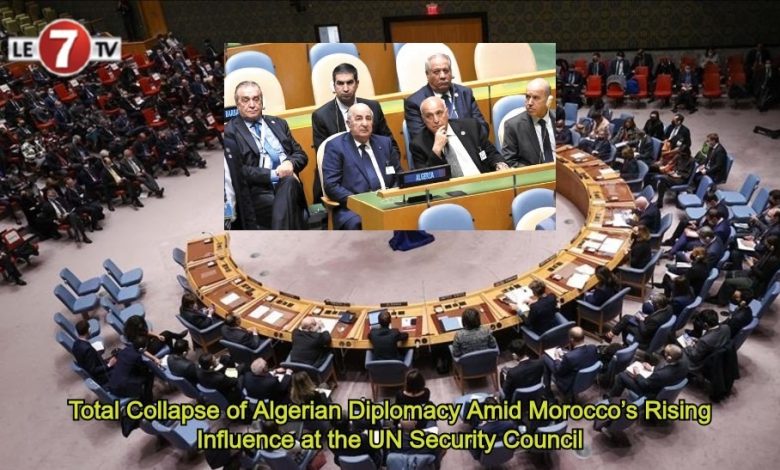
Bahrain, Liberia, the Democratic Republic of Congo, Latvia, and Colombia were elected to replace, among others, Algeria, whose term ends in utter insignificance—having failed to sway a single UN decision in favor of its separatist crusade.
For over a year, Algiers resorted to every possible trick: relentless lobbying, incendiary rhetoric, and a diplomacy of hostility in a desperate attempt to revive a lost cause—the so-called “Western Sahara.” Yet this ideological obsession, a relic of a bygone Cold War era, clashed head-on with today’s pragmatic and clear-eyed global reality.
A Strategic Defeat Against Morocco’s Royal Diplomacy
While Algeria entrenched itself in geopolitical isolation, Morocco, under the visionary leadership of His Majesty King Mohammed VI, built a robust diplomatic network based on mutual respect, economic cooperation, and continental integration. The outcome is undeniable: Algeria leaves the Security Council in disgrace, as three of Morocco’s strongest allies step in.
- Bahrain—the first Arab country to open a consulate in Laayoune—stands as a symbol of steadfast alliance with the Kingdom.
- The DRC and Liberia, both incoming members of the Council, have also affirmed their support for Morocco’s autonomy plan by opening diplomatic missions in the southern provinces and voicing firm commitment to the Kingdom’s territorial integrity.
This new Security Council configuration clearly reflects a global majority in favor of the Moroccan solution, described by many states as serious, credible, and realistic. By contrast, it signals the definitive marginalization of the separatist Algerian-Polisario rhetoric, now seen as an ideological relic disconnected from the regional need for peace and stability.
An Isolated and Discredited Algerian Regime
Algeria’s diplomatic failure is all the more resounding because it is self-inflicted. Through a mix of manipulation, disinformation, and aggressive posturing, the Algerian regime has alienated African partners, who now distance themselves from a path that hinders continental development and fuels unnecessary conflict.
Instead of convincing, Algiers repelled. Instead of uniting, it divided. While Morocco strengthens alliances across all five continents, Algeria clings to a rigid, outdated vision—out of touch with the true aspirations of African nations for prosperity, unity, and security.
A Turning Point in Favor of the Autonomy Plan
This reshaping of the Security Council comes at a strategic moment, as permanent powers—the United States, France, and the United Kingdom—increasingly align in support of Morocco’s autonomy initiative. This shift could soon lead to a paradigm change in the UN’s approach to the conflict, moving from passive management to a binding political resolution.
The momentum is historic: never have conditions been more favorable for the formal international recognition of Moroccan sovereignty under an autonomy framework—the only viable solution that aligns with international law and promises regional stability.
In conclusion, the Security Council turns the page on a depleted, ineffective, and disqualified Algerian diplomacy, and embraces a global movement rooted in realism, peace, and progress—values that Morocco consistently embodies.
History will not remember this as the end of an Algerian term, but as the end of a geopolitical illusion.
Editorial team/le7tv