Rabat to Host African Ministerial Conference on Disarmament, Demobilization & Reintegration of Child Soldiers
Rabat - Morocco will host the African Ministerial Conference on Disarmament, Demobilization and Reintegration of Child Soldiers, on Thursday in Rabat, under the theme "Creating Sustainable Futures for Children Affected by Armed Conflict."

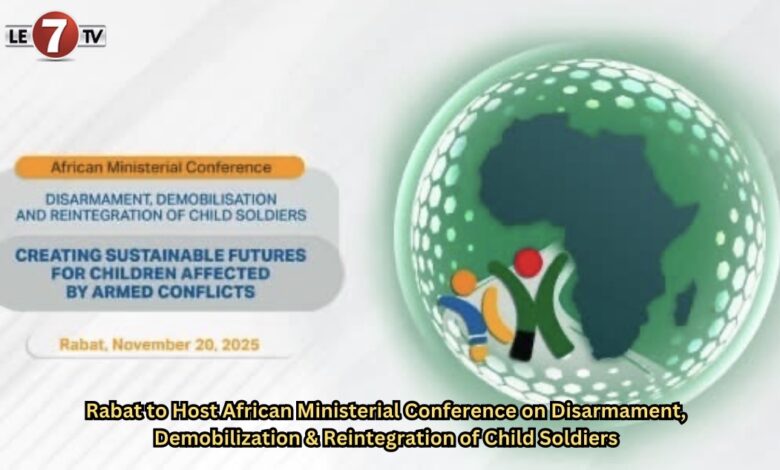
This major event is intended as a structuring milestone and a catalyst for political momentum to strengthen Africa’s collective action in favor of child protection, with a particular focus on preventing the recruitment of child soldiers.
In the face of escalating conflicts and growing threats to children, the Conference comes as an urgent response to new challenges linked to the emergence of transnational armed groups, mass displacement, cyber-recruitment, and heightened community vulnerabilities across Africa.
It takes place in a context where Africa remains one of the regions most affected by this phenomenon, calling for renewed and coordinated mobilization.
In this spirit, the Conference aims to generate strong political momentum around the fight against the recruitment of children in armed conflicts, to reinforce regional cooperation, and to lay the foundations for a future African legal instrument dedicated to the Disarmament, Demobilization and Reintegration (DDR) of child soldiers.
It also seeks to promote holistic reintegration approaches that incorporate education, mental health, family support, and socio-economic integration, while encouraging research and the sharing of expertise.
Hosting this event in Rabat reflects Morocco’s commitment—under the enlightened leadership of His Majesty the King, to peace, security, and the protection of children in Africa.
Drawing on its long-standing dedication to peace and stability, its experience in child protection, and its efforts to strengthen African capacities, Morocco provides a natural setting for this Conference.
The Rabat Conference aspires to open a new chapter in the fight against the recruitment of child soldiers—one that is more coordinated, more ambitious, and better anchored in the realities of the continent.
Editorial team/le7tv