“Caravan to Gaza”: How Algeria Exploits the Palestinian Cause to Attack Morocco’s Territorial Integrity
While the Palestinian cause remains sacred to Moroccans, upheld as a national priority by His Majesty King Mohammed VI, Chairman of the Al Quds Committee, some of Morocco’s adversaries have not hesitated to profane it, twisting it to serve petty, hostile agendas against the Kingdom’s territorial integrity. The recent so-called “solidarity caravan to Gaza”, allegedly humanitarian in nature, has revealed its true face: a disguised propaganda operation, orchestrated by networks known for their deep-rooted hostility toward Morocco.

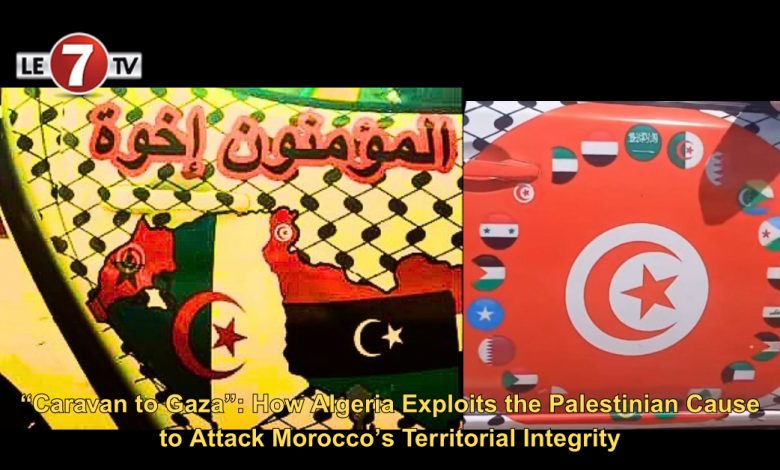
A Mutilated Map, A Poisoned Message
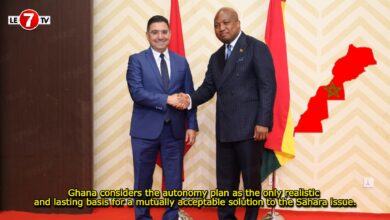
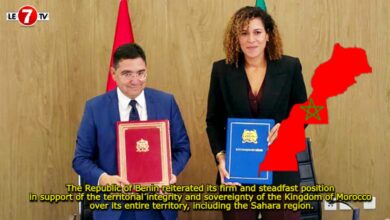
To the shock and indignation of Moroccan public opinion, the caravan featured maps of Morocco deliberately stripped of its Sahara, displayed on various communications materials. Even worse, the Moroccan flag—a historic symbol of support for the Palestinian people—was consciously excluded from visuals meant to represent Arab solidarity.
These actions are far from accidental. They represent a calculated hostility, an outrageous attempt to undermine Morocco’s unity under the guise of humanitarian activism. They are yet another example of Algeria’s political manipulation of the Palestinian cause, serving its long-standing campaign to promote the Polisario separatist group and damage Morocco’s image and interests.
Hijacked Solidarity: An Insult to the Palestinian People
Morocco’s commitment to Palestine has never been transactional. It is longstanding, profound, and unconditional, rooted in shared history, faith, and authentic Arab brotherhood. So what does it say about this so-called solidarity caravan when it excludes a key partner like Morocco? What kind of “Arab solidarity” dares to omit one of its strongest and most consistent voices?
What we are witnessing is the hijacking of a noble cause by divisive actors, guided by an agenda of manipulation and provocation. Far from aiding the Palestinian people, this campaign undermines human solidarity and exploits Palestinian suffering as part of an absurd cold war waged by Algeria against Morocco.
To erase Morocco’s flag and distort its borders is not just an attack on the Kingdom—it is an insult to the dignity of the Palestinian people, whose name is being used to fuel division among their supporters.
Hypocrisy Exposed: Algeria Uses Gaza as a Political Smokescreen
The truth can no longer be denied: this caravan was never a sincere act of solidarity. It is a political Trojan horse, an operation launched from Algiers to flood Arab and international media with anti-Moroccan messages, disguised as humanitarian support. This cynical exploitation of Palestinian pain exposes the true nature of the Algerian regime, which is using Gaza as a stage for its geopolitical obsessions.
This imposture adds to a long list of tactics in which Algeria has used the Palestinian cause as diplomatic leverage, while betraying both the spirit of Maghreb unity and Arab solidarity. Such behavior is not only disgraceful but also harmful, and constitutes a double betrayal—against the Palestinian struggle and the regional cohesion it should inspire.
Morocco Stands Tall, True to Its Principles
In the face of these sterile provocations, Morocco remains steadfast. Its support for the Palestinian cause is not conditional on the approval of others or dictated by external political agendas. It stems from a sincere and lasting conviction, championed at the highest level by King Mohammed VI, and deeply rooted in the hearts of all Moroccans.
Those who attempt to distort the Palestinian cause by turning it against Morocco only discredit themselves, betray the trust of Arab peoples, and reveal their destructive agendas. A time will come when these manipulations are judged for what they are, and when true solidarity will prevail over hatred and division.