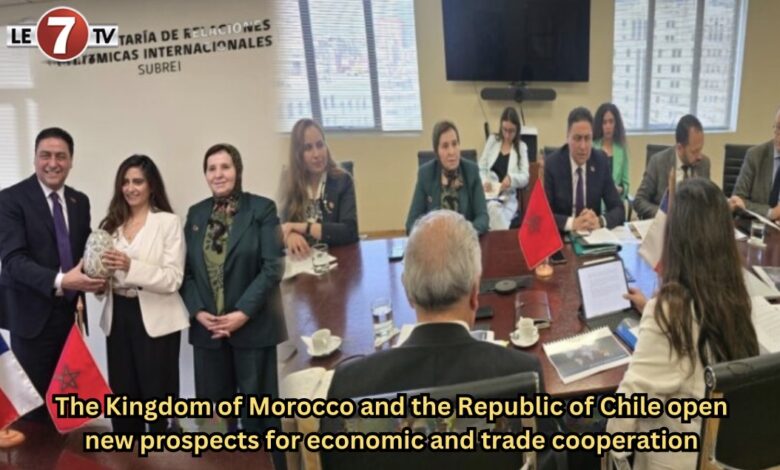
The Kingdom of Morocco and the Republic of Chile open new prospects for economic and trade cooperation
major Moroccan economic mission, led by the Secretary of State in charge of Foreign Trade, Mr Omar Hejira, carried out an official visit to the Republic of Chile as part of the Morocco–Chile Economic Forum. The mission aims to strengthen bilateral economic and trade relations and to lay the foundations for a structured and sustainable strategic partnership, in line with the implementation of the 2025–2027 Foreign Trade Programme.

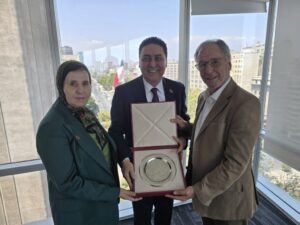
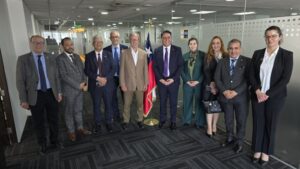
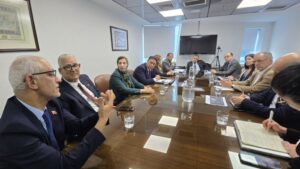
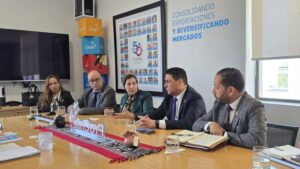
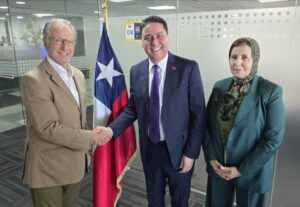
This visit also falls within the strategic vision of the Kingdom of Morocco, based on the diversification of partnerships and the strengthening of South–South cooperation, under the enlightened leadership of His Majesty King Mohammed VI, may God assist Him. It is grounded in the principles of economic complementarity, mutually beneficial cooperation and the expansion of trade, through the establishment of lasting partnerships between Morocco and Latin American countries.
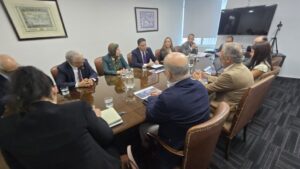
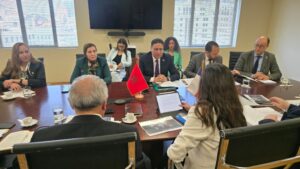
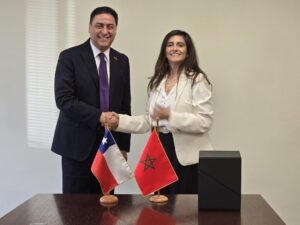
In Santiago, Mr Omar Hejira held talks, in the presence of Ms Kenza El Ghali, Ambassador of His Majesty the King to Chile, with the Chilean Minister of Economy, Tourism and Energy, Mr Álvaro García Hurtado. Discussions focused on the state of bilateral economic relations, prospects for cooperation and the identification of priority sectors with high potential. Exchanges notably highlighted the strengthening of cooperation in the run-up to the organisation by the Kingdom of the 2030 World Cup, the development of structuring industrial partnerships, the promotion of joint ventures, as well as the central role of the private sector as a driver of economic cooperation.
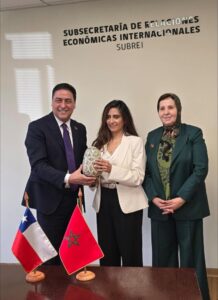
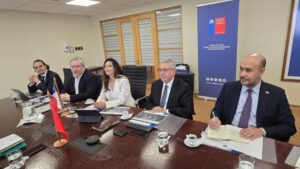
The Secretary of State was also received by the Chilean Vice Minister of International Economic Relations, Ms Claudia Sanhueza, as part of the implementation of the joint declaration signed on 18 December 2024. Both sides agreed to hold the second session of the Joint Economic and Trade Commission in 2026 in Morocco, with a view to drawing up a shared roadmap based on complementarity and the strategic positioning of the two countries as respective gateways to Africa and Latin America.
On this occasion, Mr Omar Hejira stressed that Morocco has more than 12 free trade agreements, offering privileged access to markets in over 100 countries, representing nearly 3 billion consumers. This major asset strengthens the Kingdom, under the leadership of His Majesty the King, as a strategic platform linking African markets to global markets. He recalled that this mission is part of a broader dynamic aimed at establishing a reinforced and structured framework for cooperation, similar to the strategic partnerships Morocco maintains with several of its key institutional partners.
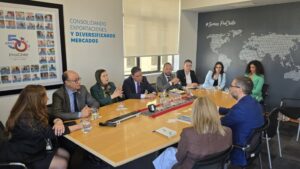
The visit was also marked by meetings with Chilean economic and institutional stakeholders, notably the “Fruits of Chile” association and the ProChile agency, with a view to developing sectoral partnerships, stimulating investment and launching joint projects with strong economic impact.
This mission confirms the shared determination of Morocco and Chile to build ambitious, pragmatic and forward-looking cooperation, in the service of shared and sustainable development on both sides of the Atlantic.
Editorial team/le7tv