Child Soldiers: Experts in Geneva Condemn Armed Groups’ Manipulation of Human Rights
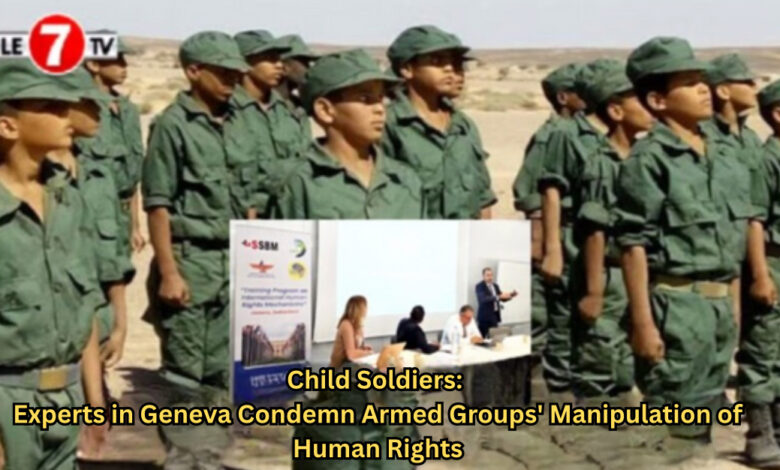
Geneva - Armed groups' growing misuse of human rights discourse to justify serious abuses, particularly the recruitment of children, came under sharp criticism Friday during a side event in Geneva, held on the sidelines of the 60th session of the Human Rights Council (HRC).

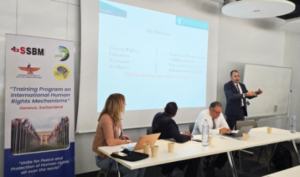
The event, hosted at the Swiss School of Business and Management, was organized by the International Research Center for the Prevention of Child Recruitment (based in Dakhla), in partnership with the Maat Center for Peace (Geneva) and the International Commission for the Respect of the African Charter.
Moderating the discussion, Blerim Mustafa, an advisor at the International Eurasia Press Fund in Oslo, warned that certain armed groups are appropriating the language of human rights to legitimize practices such as child recruitment and the militarization of civilian populations. He called for deeper scrutiny of this instrumentalization, which he said blurs accountability and weakens the international human rights system.
Abdelkader Filali, president of the International Research Center for the Prevention of Child Soldiers’ Recruitment, presented findings from fieldwork conducted across three continents. He detailed sophisticated methods used to twist humanitarian language for political and military ends.
Such practices, Filali argued, reflect what has been described as the “humanitarian industrial complex”, a system involving certain aid actors, donors, consultants, and NGOs that, rather than resolving crises, perpetuates them by serving interests instead of neutrality.
Echoing that concern, Ayman Okail, president of the Maat Center, strongly denounced separatist armed groups’ manipulation of humanitarian discourse, citing the polisario as an example. He pointed to the militarization of the Tindouf camps in southwest Algeria as a serious human rights violation, marked by arbitrary detention, loss of freedom, and ideological indoctrination.
Okail also warned against invoking human rights to justify the recruitment of children as young as 12 in Africa and elsewhere. He noted that some camps, including those in Tindouf, have been turned into disguised military bases that put civilians in grave danger.
He urged international investigations, justice mechanisms, and sanctions against groups responsible, stressing the need to distinguish genuine human rights advocacy from ideological manipulation.
Alfred Gondo, special advisor at Interfaith International, provided a sobering overview of child recruitment in conflicts across Asia, the Sahel, Sudan, and the Democratic Republic of Congo.
He stressed the importance of long-term reintegration programs combining psychological support, vocational training, and community reconciliation. Only a holistic approach that promotes local development and strengthens the rule of law, he argued, can break the cycle of child exploitation.
Nadah Alqam, Secretary-General of the International Alliance for Peace and Development, highlighted the critical role of civil society in tackling child recruitment through documenting abuses, advocating for victims, and working with UN mechanisms.
The discussion also underscored the troubling overlap between terrorist groups and separatist armed movements, particularly in Africa, warning of the risk of an entire generation shaped by violence, indoctrination and hatred – a fertile ground for extremist recruitment.
Participants called for heightened international vigilance, stronger safeguards to protect UN institutions from ideological infiltration, and a renewed commitment to preserving the neutrality of humanitarian action in the face of attempts to justify child recruitment under the banner of human rights.
Editorial team/le7tv