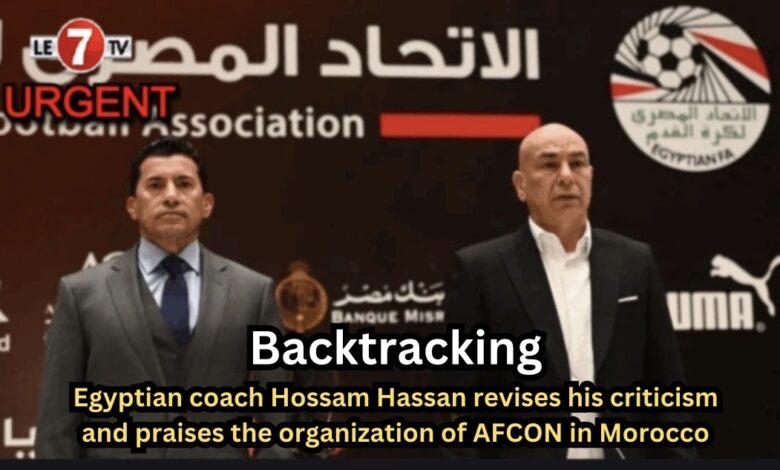
Egyptian coach Hossam Hassan revises his criticism and praises the organization of AFCON in Morocco
The head coach of Egypt’s national team, Hossam Hassan, has walked back his earlier criticism of the organization of the Africa Cup of Nations in Morocco. Speaking at a press conference held on Thursday, he praised the quality of the reception and the infrastructure put in place by the Kingdom, describing them as “ideal” on several levels.

Hossam Hassan had sparked strong controversy following Egypt’s elimination in the semifinals against Senegal. At the time, he spoke of a lack of fairness in the competition, pointing to issues related to organization, travel arrangements and refereeing, while suggesting that certain parties did not want Egypt to reach the final, given its continental history.
His brother and assistant coach, Ibrahim Hassan, had also criticized the conditions of stay, claiming that the national team had not been accommodated in a hotel and that the players had experienced inconveniences affecting their comfort ahead of the match against Senegal.
However, during this press conference, attended by Egyptian Minister of Sports Ashraf Sobhi and President of the Egyptian Football Association Hany Abou Rida, Hossam Hassan offered a completely different assessment. He praised the organization and the resources made available in Morocco.
According to him, this edition of the AFCON was one of the most demanding he has taken part in, but he stressed that the stadiums were perfectly equipped. He said he was pleased to participate in a tournament organized by a brotherly Arab and African country.
The coach also assured that the Egyptian delegation was treated with respect, both in terms of accommodation and reception. He considered this edition to be among the most significant in the history of Egyptian football.
“Based on my experience as a player and a coach in many competitions, I can say that Morocco has infrastructure and resources comparable to those in Europe, in addition to continuous security and rigorous organization,” he said.
He added that support from certain sections of the stands for other teams against Egypt was something natural, which could be explained by Egypt’s status as a constant title contender or by sentiments linked to past refereeing decisions.
Hossam Hassan concluded by stating that the AFCON was overall a success, despite the positive and negative aspects inherent to any major competition. He insisted that teams competed in a setting worthy of Africa, thanks to remarkable infrastructure visible from the group stage onward.
Translated from Abderrazzak Boussaid’s French article – le7tv