Iran Supreme Leader Ali Khamenei Reportedly Targeted in U.S. Strikes
The fate of Iran’s Supreme Leader, Ayatollah Ali Khamenei, remains uncertain following large-scale airstrikes conducted by the United States and Israel. According to several Israeli media outlets and security sources cited in the press, the Ayatollah may have been targeted during the first wave of bombardments carried out as part of this major military operation.

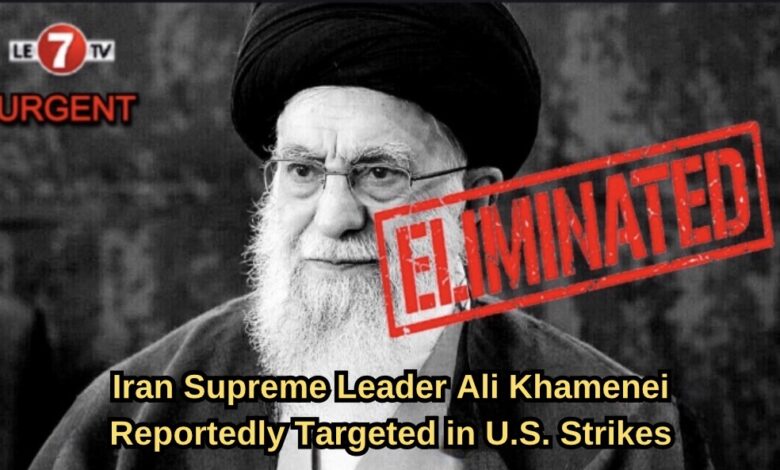
Israeli daily Yedioth Ahronoth reported that Israeli security services considered Khamenei one of the primary targets of coordinated attacks hitting multiple sites where senior Iranian officials were reportedly gathered earlier in the day. The strikes were reportedly carried out simultaneously across several strategic locations.
Preliminary Israeli assessments suggest that several top figures of the Iranian regime may have been affected. Among those reportedly targeted were Mohammad Pakpour, commander of the Revolutionary Guards, Ali Shamkhani, former secretary of the Supreme National Security Council, and other high-ranking military and security officials.
So far, Iranian authorities have not confirmed the fate of Ali Khamenei. Israeli officials remain cautious, stating that the strikes hit sites where multiple Iranian leaders were present, but the exact outcome of the operation has yet to be determined.
Additionally, Reuters reported, citing multiple sources, that two senior Iranian officials—the Defense Minister and the commander of the Revolutionary Guards—may have been killed in the strikes. The Israeli newspaper Haaretz noted that Khamenei is currently unreachable, fueling speculation about his condition and the true impact of the military operation.
This offensive marks a major escalation in Middle East tensions and could have profound consequences for the region’s strategic balance and the future of the Iranian regime.
Translated from Abderrazzak Boussaid’s French article – le7tv