4th Training Cycle for African Election Observers to Bring Exceptional Added Value to Entire Continent, Says FM

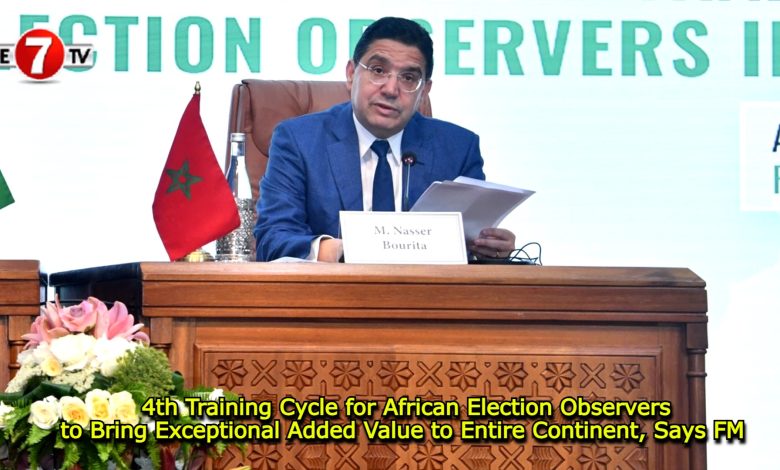
Morocco’s Minister of Foreign Affairs, African Cooperation and Moroccan Expatriates Nasser Bourita stressed on Monday in Rabat that the diversity of the participants at the 4th training cycle for African election observers, the caliber of its speakers and the relevance of its themes, will bring exceptional added value to the entire African continent.
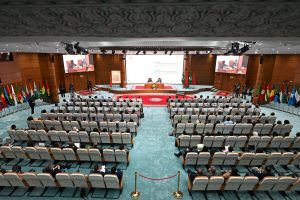
Speaking at the opening of the 4th edition of the training cycle for African election observers, Bourita noted that this Cycle, initiated just four years ago with a dozen participants, is evolving in scope and quality, both in terms of participation and substance.
He added that this year’s edition brings together 120 participants from 52 African countries representing the five regions of the continent, upholding the diversity and inclusive nature of this event and attesting to the voluntary commitment of African young election observers to contribute to achieving the lofty goals of peace, security and good governance in Africa.
Recalling that last year, women and young people accounted for 50% of trained observers, Bourita pointed out that this year they make up 68% of participants, testifying to a structuring commitment geared towards modern, open and inclusive African governance.
“Our ambition remains strong and unwavering: to equip the continent with qualified skills, capable of accompanying electoral processes and democratic transitions in Africa with diligence and professionalism”, he continued, adding that these observers are the ones contributing to building a model and inclusive governance designed for Africa by Africans.
The success of this initiative is upheld by the shared vision of an Africa in control of its own destiny, capable of validating its own electoral processes according to its own standards.
In this respect, the minister pointed out that the observers trained in previous years have already played a key role in observing several electoral processes in Africa. For this 4th edition, he said, the focus is on the role of women in strengthening election observation missions in Africa, in line with the decisions of African Heads of State and the objectives of Agenda 2063.
Morocco’s commitment to this cycle falls fully in line with the enlightened Vision of His Majesty King Mohammed VI, which makes African integration one of the foundations of shared development, Bourita said, adding that this year’s edition is special thanks to the organization, on the sidelines of the cycle, of a policy dialogue seminar devoted to inclusive governance, titled “Strengthening women’s leadership in African electoral and democratic contexts”.
“This choice reinforces the shared willingness to place women at the core of governance dynamics, in recognition of their role in building and strengthening peace and security in Africa,” he continued.
“If they are to be sustainable and legitimate, political transitions, electoral processes and governance mechanisms must reflect the diversity and all the driving forces of our societies, foremost among which are women. It is not a mere symbolic objective, but a strategic requirement, as placing full trust in women means investing in more inclusive, stable and equitable governance”, he explained.
In this regard, Morocco’s commitment to an effective role for women in these areas of peace, security and governance in Africa is an extension of its internal political choices and global commitments, he asserted.
The minister further pointed out that in an international context marked by an intense electoral year, as about 70 countries around the world, including some 20 in Africa, will be conducting crucial elections, the role of election observers grows more decisive.
Thus, he noted, the political vision underlying the organization of this 4th training cycle meets a genuine and operational need, particularly in terms of capacity building, to contribute to the success of some ten presidential and legislative elections scheduled on the continent.
As such, “we are delighted to note that several recipients of previous editions have already joined these missions, illustrating the concrete impact of this program”, Bourita indicated.
He concluded that “our ambition, together with the African Union, is to see these trained observers shape the backbone of an African body of professional, independent and strict election observers, in the service of peace and democracy in Africa”.
La rédaction/Le7tv