Nasser Bourita Receives Three New Ambassadors Accredited to His Majesty King Mohammed VI
As part of Morocco’s ongoing efforts to strengthen its diplomatic relations with international partners, Mr. Nasser Bourita, Minister of Foreign Affairs, African Cooperation, and Moroccan Expatriates, received on Wednesday in Rabat three new ambassadors who presented him with copies of their letters of credence.

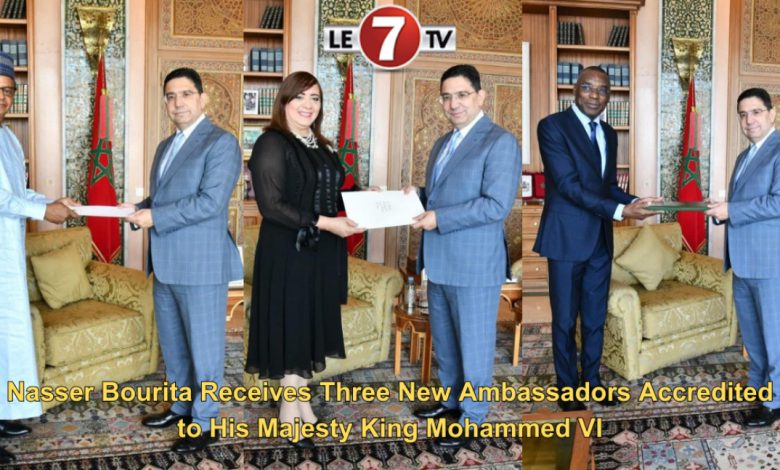
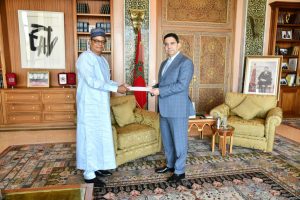
Mr. Bourita first welcomed Mr. Abdoulaye Keïta, appointed Ambassador Extraordinary and Plenipotentiary of the Republic of Niger to His Majesty King Mohammed VI. This meeting reflects the shared commitment of Morocco and Niger to reinforce their historical ties, particularly through a model South-South cooperation, driven by the aligned visions of both Heads of State.
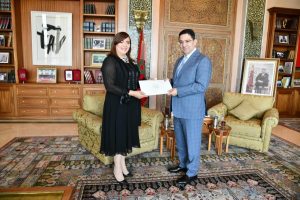
Next, Morocco’s top diplomat received Ms. Sandra Abinader, who begins her mission as Ambassador Extraordinary and Plenipotentiary of the Dominican Republic to Morocco. This occasion marks a new momentum in the bilateral relations between Rabat and Santo Domingo, especially in the diplomatic, cultural, and economic spheres, with the aim of boosting cooperation between the Kingdom and the Caribbean region.
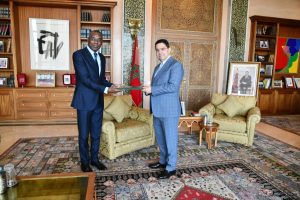
Lastly, Mr. Joseph Ahanhanzo, the newly appointed Ambassador Extraordinary and Plenipotentiary of the Republic of Benin to His Majesty King Mohammed VI, was also received. This meeting is part of the strategic partnership between Morocco and West African countries, reflecting the Kingdom’s commitment to stability, development, and regional integration on the continent.
These audiences, held in a spirit of solemnity and cordiality, underscore Morocco’s dedication to deepening its diplomatic ties and exploring new avenues of mutually beneficial cooperation. They also reaffirm the Kingdom’s central role—under the enlightened leadership of His Majesty King Mohammed VI—in promoting international relations based on respect, solidarity, and dialogue.
Editorial team/le7tv