Morocco, Paraguay Driven by Clear Will to Intensify Strategic Partnership Founded on Respect to Commitments & Loyalty to Principles – FM
Rabat - Morocco and Paraguay are driven by a clear and responsible will to intensify their strategic partnership, within the framework of a vision founded on respect for commitments and loyalty to principles, said, on Wednesday in Rabat, the minister of Foreign Affairs, African Cooperation and Moroccan Expatriates, Nasser Bourita.

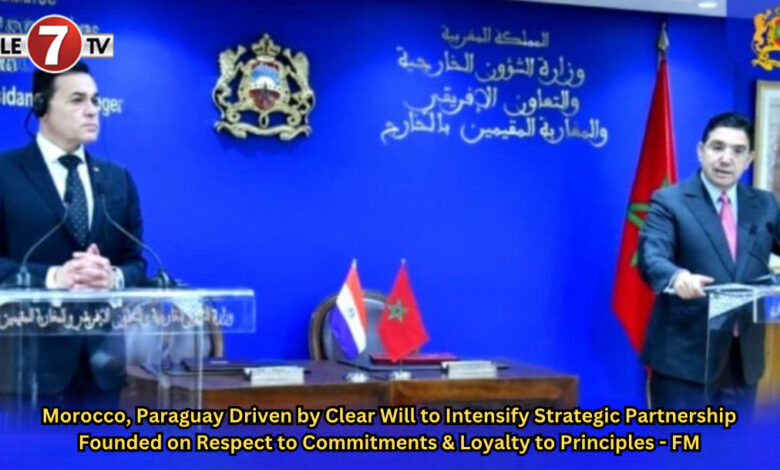
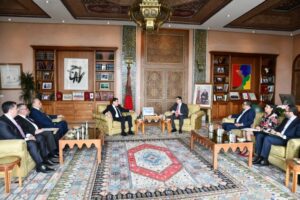
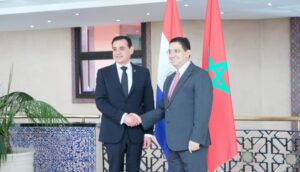
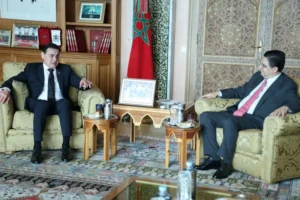
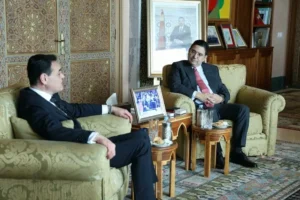
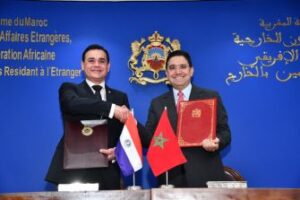
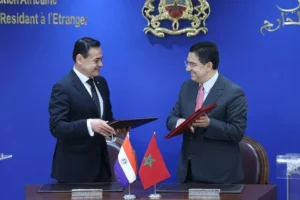
Speaking to the press following his meeting with Paraguayan minister of Foreign Affairs, Rubén Ramírez Lezcano, the minister indicated that bilateral ties “draw their strength from the vision of the two Heads of State, HM King Mohammed VI and HE President Santiago Peña, aiming to elevate them to the rank of a strategic partnership resting on structured political dialogue, multisectoral cooperation and a common understanding of regional and international challenges.”
In this regard, Bourita stressed that Lezcano’s visit to Morocco is part of a growing political momentum between the two countries, highlighting “Paraguay’s constant openness to the African continent,” illustrated in particular by the opening of its embassy in Rabat and its official decision to inaugurate a consulate general in Dakhla in the near future.
“This important step confers to our partnership a particular symbolic significance, illustrating our acting solidarity and sincere will to fully adhere to the African continental dynamic,” he added.
Bourita also welcomed the firm and continuous support of Paraguay to the Moroccan autonomy initiative, considering it as “the sole serious and credible basis” to reach a definitive political solution to the artificial dispute over the Moroccan Sahara, noting that this position “makes Paraguay a faithful ally to its convictions, respected and listened to” in Latin America.
He also praised the profound reforms carried out in Paraguay under the leadership of President Santiago Peña, aimed at consolidating social justice, economic prosperity, and active diplomacy, adding that these choices illustrate responsible governance and strengthen Paraguay’s position within regional and international bodies.
Bourita added that the two sides reaffirmed, during this meeting, their commitment to a multilateral inclusive diplomacy, founded on concertation, legitimacy and mutual responsibility.
In this respect, he commended “Paraguay’s active role within MERCOSUR and its commitment to deepening the partnership between Morocco and the regional bloc, as part of a South-South cooperation vision founded on solidarity and complimentarity.”
The minister also expressed the determination of both countries to strengthen trade relations. “We have begun discussions on bilateral trade agreements between Morocco and Paraguay, with a view to developing and expanding them to cover the Kingdom and MERCOSUR,” he said.
He concluded that this visit “consolidates the exemplary partnership between Morocco and Paraguay,” noting that both parties are working to organize high-level bilateral meetings in both countries with a view to further bolstering their ties.
Editorial team/le7tv