Eswatini FM Reaffirms in Laayoune Her Country’s Support for Autonomy Plan, Praises Development Momentum in Southern Provinces
Laayoune - The Minister of Foreign Affairs and International Cooperation of the Kingdom of Eswatini, Pholile Dlamini Shakantu, reaffirmed on Wednesday in Laayoune her country's firm and constant support for the Autonomy Plan presented by Morocco in 2007 to resolve the regional dispute over the Moroccan Sahara, praising the sustained development momentum in the southern provinces of the Kingdom.

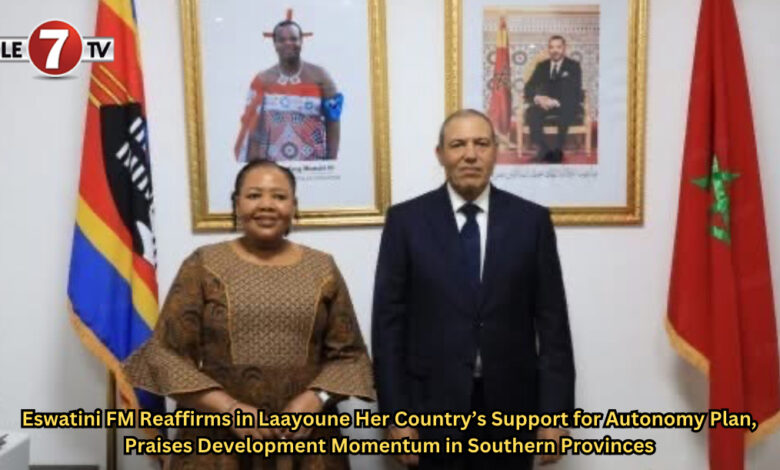
In a statement to the press following her visit to the Consulate General of Eswatini in Laâyoune, which opened in October 2020, the Eswatini foreign minister stressed that this diplomatic representation, one of the first to open in the capital of the Moroccan Sahara, reflects the strength of the ties of friendship between the two kingdoms and their commitment to strengthening bilateral cooperation in various fields.
“Having come here, we wanted to visit our consular office in Laayoune, a symbol of the good relations that we’ve had and our will to expand our commercial, cultural and touristic cooperation,” said the minister in the presence of the wali of the Laayoune-Sakia El Hamra region, governor of the Laayoune province, Abdeslam Bekrate.
She added that her country wants to encourage Eswatini’s economic operators to explore the opportunities offered by Morocco’s Southern Provinces, which are experiencing remarkable growth thanks to the structural projects launched under the Wise Leadership of His Majesty King Mohammed VI.
The diplomat also highlighted the importance of bringing African peoples closer together through South-South cooperation, emphasizing Morocco’s role as a key player in development on a continental scale.
Dlamini Shakantu co-chaired, in Rabat, alongside the Minister of Foreign Affairs, African Cooperation and Moroccan Expatriates, Nasser Bourita, the proceedings of the first session of the Joint Cooperation Commission between the two countries.
Editorial team/le7tv