Morocco–Nigeria Gas Pipeline: A $25 Billion Strategic Project

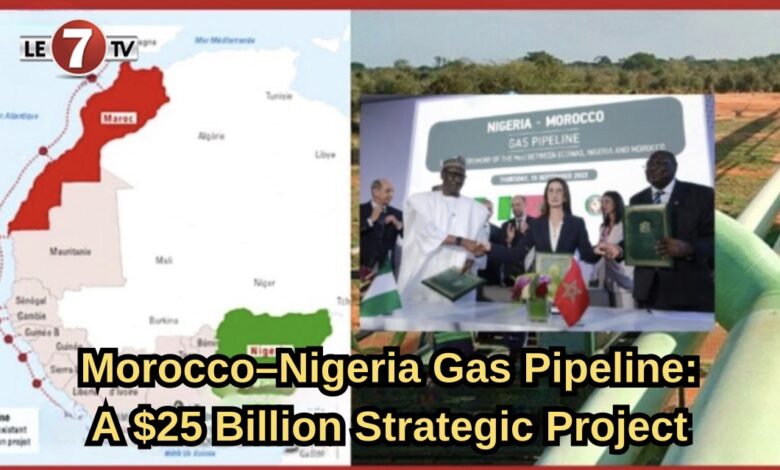
Amina Benkhadra, Director General of the National Office of Hydrocarbons and Mines, announced that the intergovernmental agreement on the project to connect Nigeria to Morocco via a gas pipeline, estimated at $25 billion, will be signed this year in the presence of representatives from the 13 countries involved.
In statements reported by Reuters, she specified that this strategic project, named the “Atlantic African Gas Pipeline,” dates back nearly a decade. It spans approximately 6,900 kilometers, combining both land and offshore routes.
According to the Moroccan official, the pipeline’s maximum capacity will reach 30 billion cubic meters per year, nearly half of which will be used to meet Morocco’s domestic needs, while a significant share will be directed toward export to European markets.
The project is backed by ECOWAS and has already passed several key stages, including feasibility studies and initial technical designs, paving the way for its concrete implementation.
After the agreement is signed, a steering authority will be established in Nigeria, bringing together representatives of the 13 partner states to ensure political and regulatory coordination. In parallel, a project company will be created in Morocco, in partnership between the National Office of Hydrocarbons and Mines and the Nigerian national oil company, to oversee financing, construction and operation.
The project aims to strengthen economic integration in West Africa, support electricity generation and industrial development, while consolidating Morocco’s position as an energy hub between Africa and Europe. The first gas deliveries are expected by 2031.
This announcement comes in a tense global context marked by a natural gas supply crisis and rising prices, particularly after the closure of the Strait of Hormuz, which has significantly disrupted international energy flows and pushed European countries to seek alternatives.
Editorial team/le7tv