Humanitarian Aid Dispatched on Very High Instructions of HM the King, Concrete Act of Support for People of Gaza – Mufti of Al-Quds
Al-Quds - The emergency humanitarian and medical aid dispatched on Very High Instructions of His Majesty King Mohammed VI, Chairman of the Al-Quds Committee, in support of the Palestinian people, particularly the residents of Gaza, is a concrete act of solidarity aimed at alleviating the suffering of the population in the Strip, who are "living under difficult conditions and blockade," stated Sheikh Muhammad Hussein, Mufti of Al-Quds and Palestine.

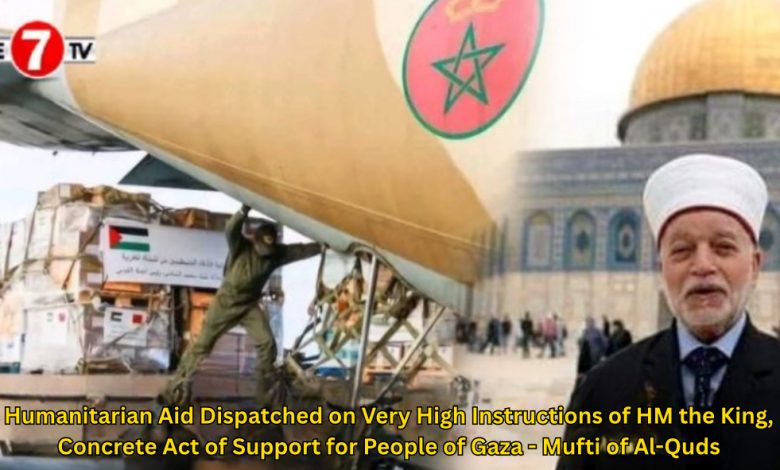
In a statement to MAP, the Mufti of Al-Quds emphasized that this generous gesture illustrates Morocco’s active solidarity with the Palestinian people during these trying times.
He added that this humanitarian initiative, which is consistent with the actions of His Majesty the King, is in line with the Sovereign’s honorable and steadfast positions in support of the legitimate rights of the Palestinian people.
Sheikh Muhammad Hussein also stressed that this initiative reflects Morocco’s constant and ongoing commitment, under the leadership of His Majesty the King, Chairman of the Al-Quds Committee, to support the resilience of the Palestinian people. It also reinforces the Kingdom’s position as a nation that stands firmly by just causes in the Arab world—first and foremost the Palestinian cause, he added.
His Majesty King Mohammed VI, Chairman of the Al-Quds Committee, had issued His Very High Instructions for the dispatch of emergency humanitarian and medical aid for the brotherly Palestinian people, particularly the residents of the Gaza Strip.
This aid, totaling nearly 180 tons, includes basic foodstuffs, milk and children’s products, as well as medicines and surgical supplies for the most vulnerable populations. It also comprises blankets, suitable tents, and other necessary equipment.
Editorial team/le7tv (With MAP)