Government Council Adopts Draft Decree on Access to Exceptional Aid Under the Direct Social Support Scheme
The Government Council adopted on Tuesday draft decree No. 2.25.1064 relating to access to exceptional aid under the direct social support scheme, presented by the Minister Delegate to the Minister of Economy and Finance in charge of the Budget.


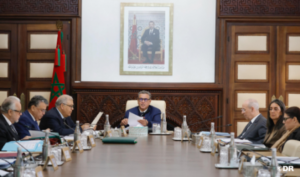
According to a statement from the Ministry Delegate in charge of Relations with Parliament, government spokesperson, this draft decree forms part of the continued implementation of the regulatory texts linked to the direct social support system, which was officially launched on December 2, 2023, in application of the High Royal Instructions.
The draft aims to operationalize the provisions of Article 16 of Law No. 58.23 on the direct social support program, by defining the amounts, conditions and eligibility criteria, as well as the modalities for granting the specific aid intended for orphaned children and abandoned children housed in social protection institutions. The same source specifies that the decree takes into account the particular situation of this category, while ensuring the principle of equality with other children benefiting from the assistance provided under the direct social support program.
The monthly amount of this aid has been set at 500 dirhams, to be paid into an account opened in the child’s name with the Caisse de dépôt et de gestion (CDG), in accordance with the legislative texts governing the management of minors’ funds.
Upon reaching the legal age of majority, the beneficiary will be able to withdraw the full amount deposited, with the total received not being less than 10,000 dirhams. In the event of the beneficiary child’s definitive departure from the institution or upon reaching legal adulthood, the child concerned or, where applicable, his or her legal representative will be informed of all data relating to the account.
Editorial team/le7tv