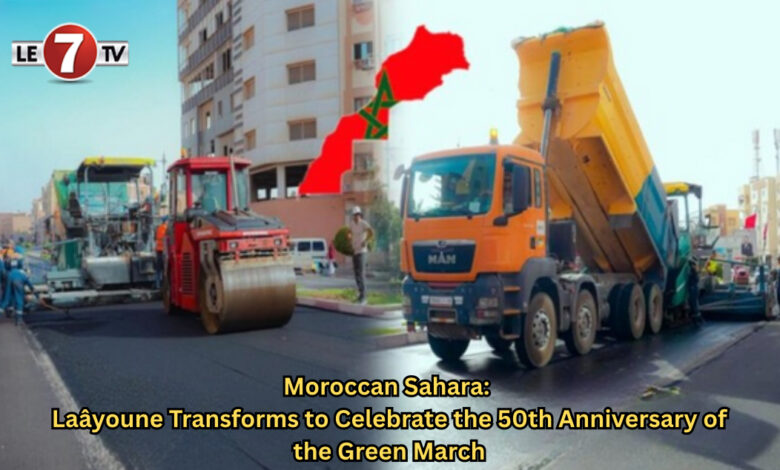
Moroccan Sahara: Laâyoune Transforms to Celebrate the 50th Anniversary of the Green March
As the 50th anniversary of the historic Green March approaches, Laâyoune, the undisputed capital of the Southern Provinces, is preparing to write a new chapter in its history. The city is undergoing a sweeping movement of modernization and beautification, mobilizing all local efforts to present, on this symbolic occasion, the image of a dynamic, modern city that remains true to its role as the beacon of the Moroccan Sahara.

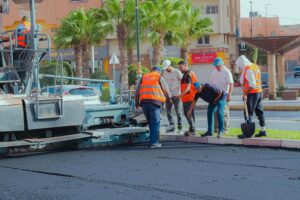
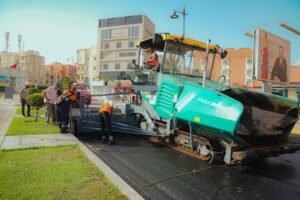
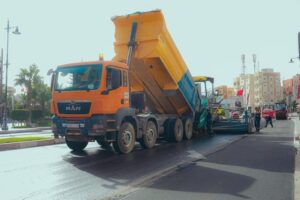
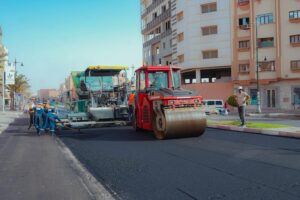
Driven by local authorities and under close daily supervision of major infrastructure projects, the Saharan metropolis is rapidly transforming. Each renovated avenue, modernized facility, and redesigned public space reflects the firm determination to elevate Laâyoune to the level of a national event that embodies pride, unity, and renewal.
At the heart of these preparations, the future University Hospital Center (CHU) of Laâyoune stands as the jewel of this transformation. Built on 18 hectares, with a capacity of 500 beds and state-of-the-art equipment meeting international standards, it is set to become a leading medical hub for the entire region. More than just a hospital, it will serve as a center for quality care, research, and training for future generations of doctors and nurses. To date, over 85% of the work has been completed, with technical teams working tirelessly to ensure that this landmark facility will be inaugurated in harmony with the Green March anniversary celebrations.
This project, the fruit of the enlightened vision of His Majesty King Mohammed VI and integrated into the new development model for the Southern Provinces launched in 2015, reflects the royal will to provide local populations with modern services and to reduce territorial disparities. It also reaffirms the Kingdom’s ambition to make Laâyoune a regional medical platform, open not only to Moroccan patients but also to neighboring African populations, reinforcing Morocco’s role as a partner of solidarity and trust on the continent.
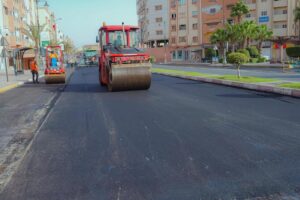
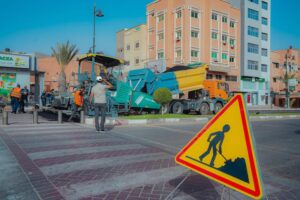
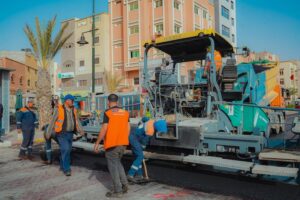
At the same time, the Municipal Council of Laâyoune is multiplying initiatives to give the city a new look. The districts of Al-Wahda, Al-Wifaq, and 25 Mars are undergoing complete redevelopment: renovated sidewalks, upgraded roads, efficient and modern public lighting, along with the rehabilitation of major boulevards and main entrances to the city. Mohammed VI Boulevard, a true urban showcase, is being paved with high-quality materials and fitted with a new lighting system, embodying the image of a modern and welcoming city.
These efforts also include the refurbishment of schools, the creation of 38 new public squares, and the development of green spaces, including a large municipal nursery, which will enhance residents’ quality of life and bring ecological harmony to the city.
The commemoration of the Green March will go beyond symbolic remembrance: it will mark the culmination of a dynamic process of comprehensive and structural development. The inauguration of the University Hospital Center, in particular, will symbolize the alliance between social progress, African solidarity, and royal vision, setting Laâyoune firmly on a path toward the future.
Through these large-scale projects and exemplary mobilization, Laâyoune is preparing to welcome with pride a 50th anniversary rich in symbols and filled with hope, confirming its role as a modern capital, open to the world and firmly rooted in national unity.
Translated from Abderrazzak Boussaid’s French article – le7tv