Moroccan Sahara: UN Secretary-General Highlights the Multidimensional Development Benefiting Populations in the Kingdom’s Southern Provinces
In his latest report to the Security Council on the Moroccan Sahara, United Nations Secretary-General António Guterres highlighted the scale of the large-scale socio-economic development efforts currently underway in the Southern Provinces for the benefit of local populations.

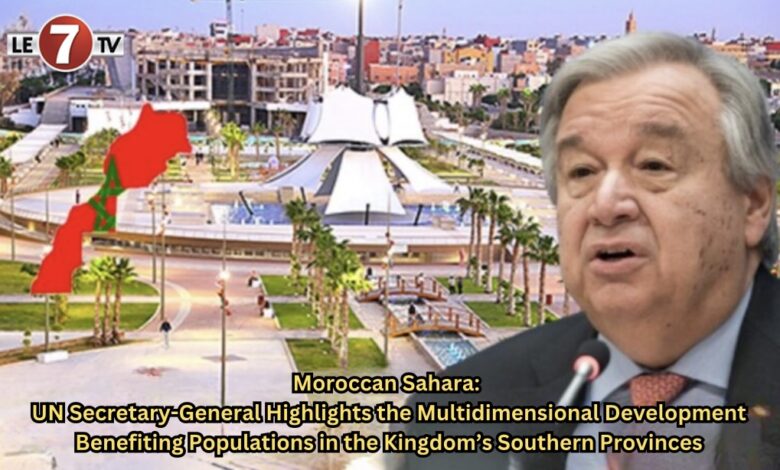
The Secretary-General notably mentioned strategic projects in key sectors such as infrastructure, including highways, ports, and airports, as well as renewable energy, electricity, education, health, and other social areas.
Mr. Guterres also referred to the results of the census conducted by Moroccan authorities in September 2024, which showed a significant increase in the population living in the Kingdom’s Southern Provinces, rising from 450,000 to 600,000 inhabitants compared to 2014. This meaningful figure reflects the attractiveness and quality of life in these Moroccan provinces, which continue to draw more residents while also recording a higher birth rate.
The UN Secretary-General also underlined the organization of diplomatic, cultural, and sporting events in the Moroccan Sahara, which symbolize the growing national and international prominence of the Southern Provinces.
These key references once again demonstrate the Secretary-General’s positive acknowledgment of Morocco’s development efforts, in line with the Vision of His Majesty King Mohammed VI, and as outlined in the new development model for the Southern Provinces.
It also serves as a strong response by the UN Secretary-General to the false claims spread by Morocco’s adversaries, regarding the alleged exploitation of natural resources, the supposed lack of benefit for the region’s population, or the existence of a so-called war in the Moroccan Sahara.
At the same time, Mr. Guterres repeatedly mentioned the dire situation in the Tindouf camps in Algeria, as well as the misery and precarity endured by the populations held there, who remain deprived of their most basic rights.
Editorial team/le7tv