French Ambassador Sees UNSC Resolution as ‘Historic Turning Point’ in Final Settlement of Sahara Issue
Rabat - United Nations Security Council Resolution 2797 on the Moroccan Sahara, adopted last Friday, constitutes "a historic turning point" in the final settlement of the Moroccan Sahara issue, said French Ambassador to Morocco Christophe Lecourtier.

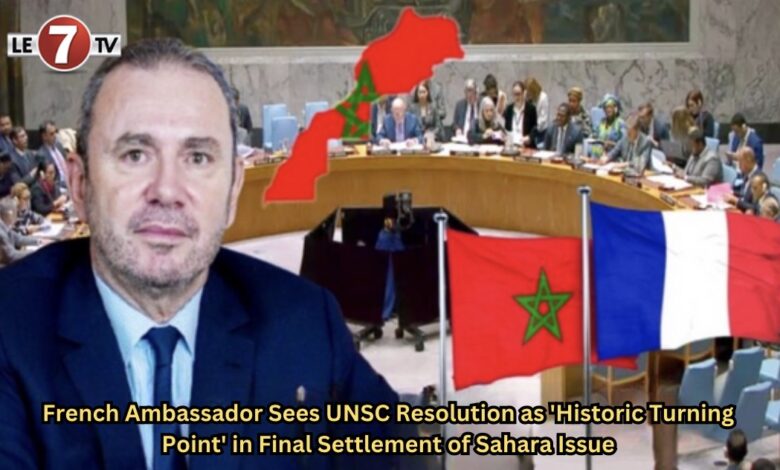
Lecourtier, who was a guest on M’hamed Bhiri’s program “Inter Matin,” broadcast Wednesday on Chaîne Inter, described October 31 as a “historic date.”
“As a diplomat, it was a great privilege to witness this historic resolution. I have been a committed witness to everything that has happened in recent years,” enthused Lecourtier.
“France is delighted with Morocco’s success under the leadership of His Majesty King Mohammed VI,” stressed the French diplomat, who highlighted the excellent cooperation between the Kingdom and France in various fields.
The ambassador reiterated France’s support for Morocco’s territorial integrity, particularly the initiative for autonomy under Moroccan sovereignty, and highlighted the commitment of French President Emmanuel Macron to this process.
“France stands by Morocco just as Morocco stood by France,” he assured.
In terms of cooperation, France will continue along the same path, he said, recalling in this regard the French President’s recent state visit to the Kingdom and the agenda put in place to address the major challenges facing both countries over the next 20 years.
Lecourtier also emphasized Morocco’s African vision, particularly in favor of the Sahel and Sub-Saharan Africa, noting that in the southern provinces of the Kingdom, “there is a destiny not only for Morocco but also for Africa, to which we fully subscribe and which we believe represents a great opportunity for these provinces, for Africa, and for France in its relations with this continent.
Editorial team/le7tv