Morocco Chairs Inaugural Technical Meeting of Group of Friends of Sport and Migration in Geneva
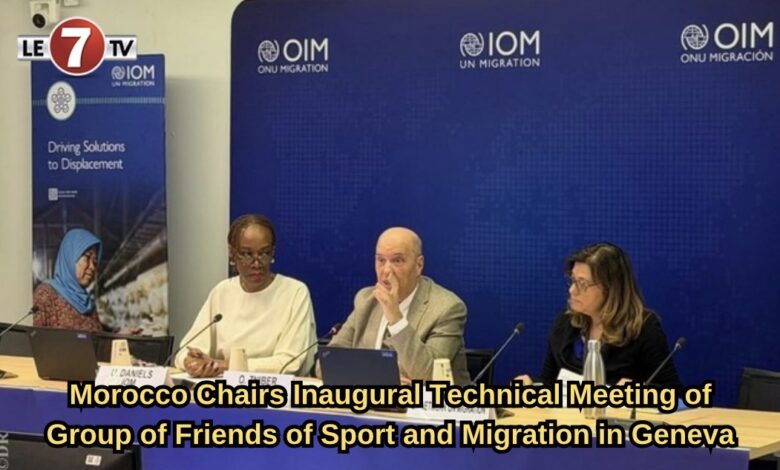
Geneva - Morocco's Ambassador and Permanent Representative to the United Nations in Geneva, Omar Zniber, on Wednesday chaired the inaugural technical meeting of the Group of Friends of Sport and Migration at the headquarters of the International Organization for Migration (IOM), bringing together some thirty delegations.

Established in December 2025 in the wake of a high-level meeting in New York, the Group seeks to structure, at the multilateral level, the nexus between sport and migration governance.
Co-facilitating the meeting alongside IOM Deputy Director General Ugochi Daniels, Zniber stressed the need to “move from political commitment to operational delivery,” advocating for an evidence-based approach that demonstrates the role of sport in reducing prejudice and fostering social cohesion.
He outlined four strategic pillars underpinning the Group’s work: social inclusion and community cohesion; protection of human rights and the fight against discrimination; economic empowerment of migrants; and policy coherence. He also underscored the importance of embedding sport as a cross-cutting instrument within migration policies, in complement to the Global Compact for Safe, Orderly, and Regular Migration.
The Group’s 2026 roadmap centers on key milestones, including the identification and mapping of best practices at national and local levels ahead of the International Migration Review Forum (IMRF), scheduled for May in New York. In this context, Zniber announced that a side event led by Morocco, on behalf of the Group, has been selected among the Forum’s 17 official events.
Co-organized with the IOM, the meeting aimed to generate evidence-based practices, develop actionable recommendations, secure voluntary commitments from States, and launch a global online compendium of best practices.
Zniber noted that the compendium -set for publication in December- will mark the culmination of the Group’s 2026 cycle, serving to consolidate and disseminate initiatives that highlight the structuring role of sport in the inclusion, protection, and socio-economic integration of migrants.
For her part, Daniels welcomed the relevance of Morocco’s initiative, stating that it “consolidates the Kingdom’s role as a catalyst in global migration governance—a role established since Marrakech in 2018 and reaffirmed by its status as a champion country.” She emphasized that sport constitutes a strategic, not merely symbolic, lever for social inclusion, community cohesion, and the resilience of migrant populations.
The IOM Deputy Director General further stressed that the platform should not become “yet another discussion forum,” but rather function as an operational framework directly aligned with the objectives of the Global Compact, particularly those related to a whole-of-society approach and social inclusion.
The IOM intends to formalize sport as a fully fledged programmatic entry point within its operational work, drawing on consistent field evidence that underscores its effectiveness as a tool for integration, she added.
Beyond inclusive rhetoric, Daniels also highlighted the protective dimension of sport in migration contexts, noting that the Group seeks to promote sport-related migration that is safe, regulated, ethical, and inclusive.
Discussions reflected strong interest in the initiative, with several delegations (including Iraq, Spain, Azerbaijan, and Brazil) underscoring the universal nature of sport as a powerful vehicle for inclusion and dialogue.
This first meeting laid the operational groundwork for the Group’s activities in 2026 by presenting its objectives, working modalities, and thematic priorities while opening a platform for States and partners to outline potential contributions. It also initiated the global mapping of existing initiatives and the collection of best practices, encouraged broader membership, and explored synergies with ongoing international processes, notably the IMRF.
Editorial team/le7tv