Geneva: Morocco Highlighted as Model of Integrated Development and Stability in Africa
Geneva - Participants in a panel discussion, held on Friday in Geneva on the sidelines of the 60th session of the Human Rights Council, debated development challenges and prospects in Africa, highlighting Morocco as a model of integrated development and its structuring role on the continent.

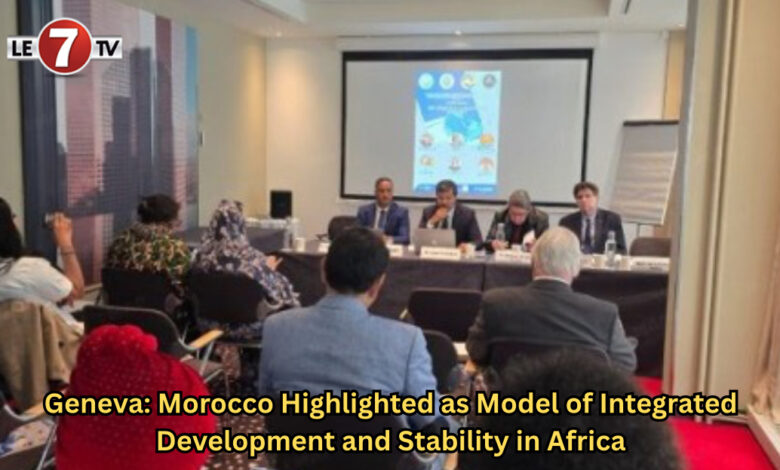
Speakers at the event, held under the theme “What future for development in Africa,” noted that the Kingdom is a driving force for regional integration and pointed to Morocco’s model as a source of inspiration for the continent, based on a vision of solidarity, inclusion, and forward-looking development.
Shaibata Mrabih Rabou, from the Saharawi Center for Studies and Research in Development and Human Rights, stressed Morocco’s active involvement in the launch of major continental initiatives, driven by the vision of HM King Mohammed VI. He cited in particular the Royal Atlantic Initiative, a project to open up the Sahel countries via access to the Atlantic Ocean, and the Nigeria-Morocco gas pipeline.
These projects, which are both strategic and mutually supportive, aim to strengthen regional integration, energy security, and human development, while placing Africa at the heart of the Kingdom’s priorities, he said.
Mostafa Maelainine, president of the Moroccan-Spanish-Latin Center for Strategic Studies (CEEMEL), stressed the direct link between stability, development, and regional cooperation. Taking the Moroccan Sahara as an example, he highlighted the progress made by cities such as Dakhla and Laâyoune, which have become regional hubs thanks to investments in infrastructure, education, green energy, and logistics.
Mehmet Sukru Guzel, president of the Peace and Reconciliation Studies Center, praised Morocco’s “smart power” approach, combining religious diplomacy, security, and socio-economic development.
He underlined Morocco’s ability to promote sustainable human security, in line with the African Union’s Agenda 2063, while playing a key role in the implementation of the African Free Trade Area (AfCFTA) as a major logistical and financial hub for the continent.
For his part, Pedro Ignacio Altamirano, president of the Altamirano Foundation, recalled the structural challenges facing Africa, including armed conflict, repression, impunity, and climate change.
The Spanish speaker called for an approach centered on human rights, democracy, and climate justice, which are essential for truly sustainable and equitable development.
Editorial team/le7tv