AFCON 2025: Senegalese Government Rejects CAF Decision, Calls for International Investigation
The crisis surrounding the 2025 Africa Cup of Nations has taken a new turn. The Senegalese government has officially rejected the ruling issued by the Confederation of African Football’s Appeal Board, which stripped the national team of the title and awarded it to Morocco.

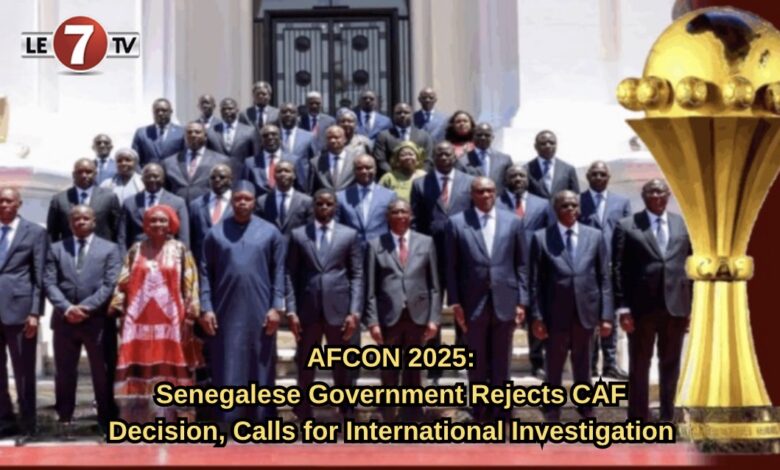
In a statement released in Dakar, Senegalese authorities described the decision as “serious and unprecedented,” arguing that it undermines the integrity of sport and weakens the credibility of African football institutions.
The government maintains that the ruling contradicts the fundamental principles of fairness and sporting justice. According to officials, it is based on a flawed interpretation of the regulations, making it both “legally questionable and deeply unjust.”
Senegalese authorities insist that the final was played in full compliance with the rules and that its outcome was decided on the pitch. Challenging that result, they argue, risks eroding the trust of African supporters in sporting institutions.
Dakar has firmly rejected any attempt to strip the national team of its title “through an administrative decision,” reaffirming its commitment to the sovereignty of results earned on the field.
Toward an International Legal Battle
In response, Senegal is preparing to escalate the matter. The government has called for the launch of an independent international investigation into potential irregularities within CAF’s governing bodies.
It also announced its intention to pursue all available legal avenues, including international jurisdictions, in order to defend its position and seek recognition of the original result.
For context, the CAF Appeal Board ruled in favor of the Royal Moroccan Football Federation by applying Articles 82 and 84 of the competition regulations. The decision concluded that Senegal had forfeited the final, awarding Morocco a 3–0 victory.
This ruling, which overturned the earlier decision of the Disciplinary Committee, has reignited tensions and triggered a major crisis in African football, now extending beyond sport into legal and political spheres.
As the debate intensifies, AFCON 2025 is no longer being defined solely on the pitch, but in a broader confrontation involving sporting, institutional and political stakes.
Translated from Abderrazzak Boussaid’s French article – le7tv