Rabat Hosts Final GCTF Conference on Education, Countering Extremism
Rabat - Morocco's ministry of Foreign Affairs, African Cooperation, and Moroccans Expatriates is hosting, in Rabat on Thursday, the closing conference of the Global Counterterrorism Forum (GCTF) Initiative on Education for the Prevention and Countering of Violent Extremism Conducive to Terrorism (EDU4PCVE), co-chaired by the Kingdom of Morocco and the European Union and implemented by the Hedayah International Center of Excellence.

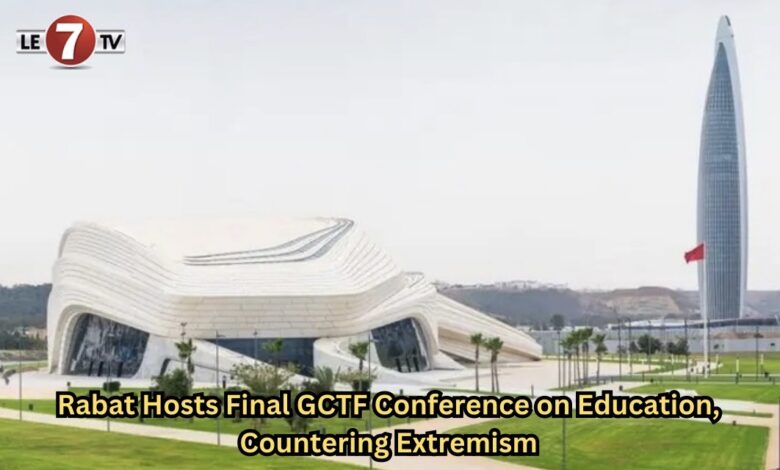
This international meeting brings together government officials, experts, international organizations and educational institutions to present the results of a series of initiatives dedicated to bolstering the role of education in preventing radicalization and violent extremism.
The Conference highlighted the Initiative’s four main deliverables: an analytical overview, presented in the Research Brief, tracing the major developments observed over the last decade in terms of vulnerability factors, digital identities, and new learning dynamics; a training-of-trainers (ToT) program designed to strengthen the capacities of decision-makers, teachers and practitioners in prevention through education; a Monitoring, Evaluation, and Learning (MEL) Toolkit to measure the impact of initiatives and improve the quality of educational interventions; and the Addendum to the Abu Dhabi Memorandum on Good Practices in Education and Countering Violent Extremism, updating GCTF best practices in light of technological, social, and pedagogical changes.
These tools form the operational basis of the EDU4PCVE Initiative, which aims to provide a renewed framework, based on innovative approaches, to strengthen the resilience of education systems to the risks of radicalization, including in digital environments and non-formal learning spaces.
The Conference illustrates Morocco’s ongoing efforts to promote a comprehensive and proactive approach to preventing violent extremism.
True to its commitment to preventing and combating violent extremism, the Kingdom continues, through this Initiative and other actions and activities carried out within the framework of the GCTF, to play a leading role in promoting the integration and use of tools developed to strengthen the resilience of societies to the risks of radicalization.
Launched two years ago, the EDU4PCVE Initiative held its inaugural conference in Rabat, followed by a technical workshop in Brussels. It is now coming to an end with this exercise in reporting and presenting results, which is part of the work of the Global Counterterrorism Forum (GCTF), an international platform with 32 members dedicated to strengthening cooperation and developing best practices in preventing and combating terrorism and violent extremism.
Editorial team/le7tv