Morocco Hosts Side Event on ‘African Connectivity’ in New York
Nations Unies (New York) - Morocco hosted, on Thursday in New York, a high-level side event on "African Connectivity: The Path to Continental Integration," on the sidelines of the 80th session of the UN General Assembly.

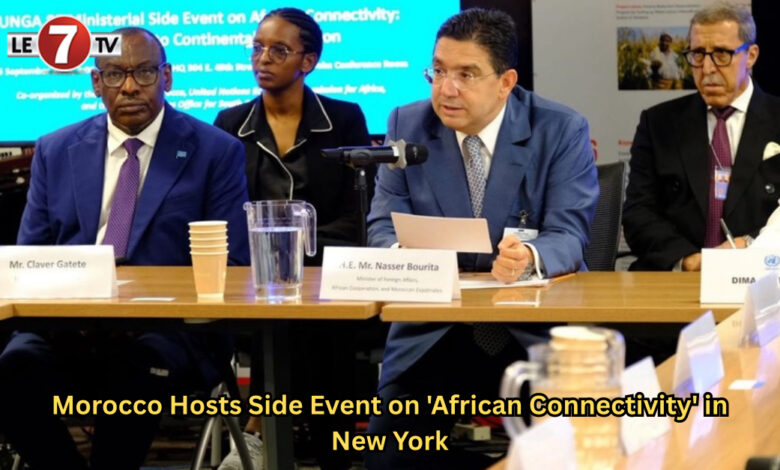
The event, organized jointly with the United Nations Economic Commission for Africa and the United Nations Office for South-South Cooperation, saw the participation of several heads of specialized international agencies and African ministers, including Morocco’s Minister of Foreign Affairs, African Cooperation, and Moroccan Expatriates, Nasser Bourita.
The meeting was an opportunity to place the theme of African connectivity at the center of multilateral discussions and to contribute to international advocacy for a resilient and prosperous Africa. It also highlighted the strategic role of African connectivity in achieving regional and international agendas, including the 2030 Sustainable Development Agenda and African integration.
During the event, participants noted that Africa is undergoing unprecedented economic and social transformation, driven by transformative continental initiatives and projects, including the African Continental Free Trade Area (AfCFTA). They observed, however, that this dynamic is hindered by a lack of connectivity, which limits the continent’s potential for integration and growth, despite its abundant resources and assets to embark on a path of sustainable, inclusive development.
In the area of physical infrastructure, speakers pointed out that the poor condition and inadequacy of roads, railways, modern ports and airports, and logistics corridors hinder trade flows, noting that less than 17% of trade in Africa takes place between African countries.
Transport costs in Africa are among the highest in the world, reducing business competitiveness and limiting the expected benefits of AfCFTA, they deplored.
In the energy sector, participants highlighted that more than 600 million Africans still lack access to electricity, explaining that the lack of interconnections between national grids undermines energy security and slows down industrialization processes.
Yet the continent holds enormous potential in the energy sector, particularly in the transition to renewable energy, which offers a unique opportunity to accelerate efforts toward sustainable energy integration at the regional and even continental level, they said.
Africa remains the least connected continent in the world. According to the International Telecommunication Union (ITU), only 38% of its population was connected online in 2024, far below the global average of 68%.
This digital divide impedes digital transformation, deprives youth of opportunities for education, innovation, employment, and exacerbates inequalities and disparities between urban and rural areas both within countries and across the continent.
Editorial team/le7tv