Automotive Industry: Morocco Asserts Itself as a Key Platform in the New Strategy of Chinese Manufacturers
Morocco is confirming, year after year, its rise as a central player in the global automotive industry. A recent report by the specialized platform Tire China, dedicated to analyzing the automotive components sector, delivers an unambiguous conclusion: the Kingdom is no longer a simple emerging production site, but a strategic hub that has become indispensable, particularly for Asian industrial players and more specifically for Chinese tire manufacturers.

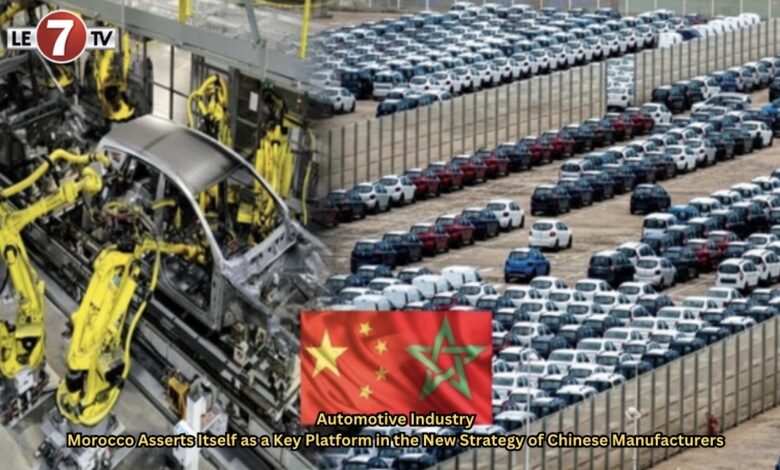
According to this analysis, the investment momentum observed in Morocco is deeply transforming global supply chains. The massive establishment of international carmakers has reshaped the country’s status, which is now regarded as a structuring link within the global automotive ecosystem. The Kingdom is thus emerging as a territory that no industrial actor can afford to ignore if it seeks to remain competitive on European and international markets.
This reconfiguration is driven by several converging factors. On the one hand, the gradual shift of supply chains toward locations close to Europe, offering controlled costs and preferential access to markets, clearly plays in Morocco’s favor. On the other hand, the strength of the national automotive industry further reinforces its attractiveness. With production nearing 560,000 vehicles per year and an announced target of one million units in the short term, the Moroccan market offers equipment manufacturers, particularly tire producers, a stable, structured and fast growing industrial base.
The report also highlights the strength of the groups already established in the Kingdom. Renault’s Tangier plant ranks among the most efficient in the world, with a capacity exceeding 300,000 vehicles per year, while Stellantis has raised its output to nearly 500,000 units. This ramp up is creating growing demand for local supply chains capable of meeting requirements in terms of responsiveness, competitiveness and compliance with international standards.
In this context, the arrival of Chinese manufacturers such as BYD or Geely represents a strategic turning point. Their establishment naturally comes with their own industrial ecosystems, opening the way for deeper integration of Chinese suppliers, particularly in the tire sector. For these manufacturers, Morocco represents an ideal opportunity: a mature industrial environment, competitive costs and an ability to adapt that matches the requirements of Western markets.
Morocco’s advantage, however, goes beyond costs alone. The free trade agreements concluded with the European Union, the United States, several Middle Eastern countries and Africa give the Kingdom a unique position. Producing in Morocco allows direct access to the European market without customs duties, while reducing exposure to control mechanisms and subsidy investigations that have become increasingly strict within the EU. This configuration provides industrial players with a level of commercial and regulatory security that has become rare.
Faced with the growing constraints confronting European companies, including the energy crisis, labor shortages, social pressure and tightening regulations, Morocco appears as a credible and efficient alternative. Its geographic proximity, illustrated by the port of Tangier Med located just 14 kilometers from Spain, gives it a logistical advantage superior to that of several Eastern European countries. The Kingdom thus offers industrial flexibility that many EU member states now struggle to guarantee.
The ecological transition further strengthens this attractiveness. New European requirements on carbon, traceability and sustainable production find favorable ground in Morocco, thanks to its strategic phosphate reserves, its advanced positioning in renewable energy and green hydrogen, as well as its high level logistics infrastructure.
Finally, Tire China emphasizes the coherence and continuity of Morocco’s industrial policies. Dedicated industrial zones, investment incentives, modern infrastructure and a stable regulatory framework form the pillars of a clear and sustainable strategy, in contrast to more uncertain models seen elsewhere.
For Chinese tire manufacturers, Morocco is therefore far more than an industrial relay. It is becoming a strategic anchor point at the heart of global value chains. The report concludes that future competition will no longer be driven solely by production costs, but by the ability to operate within strong regulatory, logistical and ecological environments. In this new equation, those who establish themselves early in Morocco will hold a decisive advantage in the next European industrial battle.
Editorial team/le7tv