Algerian Diplomacy Collapses in Cairo and in Sochi: The World Closes the Door on the Polisario’s Separatist Fictions Backed by Algiers
Meeting in Cairo on December 19 and 20, the second ministerial forum of the Russia Africa Partnership delivered an unambiguous message: serious international cooperation can only be built with sovereign states recognized by the United Nations. In its final communiqué, the forum explicitly ruled out any non recognized entity, sweeping aside the repeated diplomatic infiltration attempts of the Polisario Front, a political instrument kept alive by the Algerian military regime.

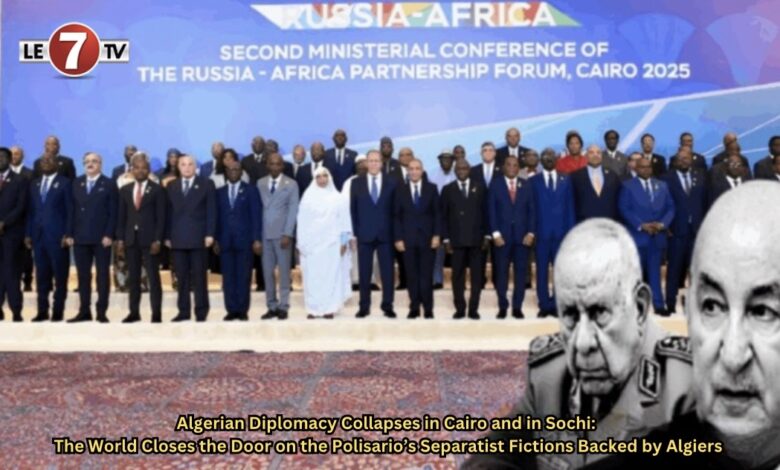
Behind carefully calibrated diplomatic wording, the reality is clear: the Polisario no longer has a place in credible forums, and even less in strategic partnerships linking Africa with major powers. The forum text stresses cooperation limited to African states “internationally recognized”, in connection with the African Union and legitimate regional organizations, thereby reaffirming a strict reading of international legality.
This choice marks a sharp rebuke to Algerian diplomacy, which continues, against all political and legal logic, to promote a puppet entity devoid of sovereignty, recognized territory and popular legitimacy. Year after year, Algiers multiplies pressure, maneuvers and bargaining to impose the Polisario in African and Afro international forums. Year after year, these attempts end in resounding failure.
The growing isolation of a worn out Algerian agenda
The Cairo forum only confirms a deep trend on the African continent: the drastic reduction of the spaces where the Polisario could still maintain the illusion of international recognition. From now on, the vast majority of international partners refer the Moroccan Sahara issue to its sole and legitimate framework, the United Nations, in accordance with Security Council resolutions.
This refocusing further isolates an Algerian regime trapped by its own ideological obsessions, unable to adapt its discourse to contemporary geopolitical realities. By sacrificing its regional interests to an artificial cause, Algiers finds itself marginalized, while Morocco consolidates its credibility and alliances.
Sochi had already set the tone
One year earlier, at the first Russia Africa ministerial forum in Sochi, the same scenario had already unfolded. The absence of the Polisario was not a protocol oversight. It reflected a strategic line openly assumed by Moscow, based on pragmatism, stability and the international recognition of partners.
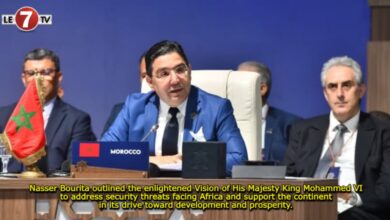
In a tense global context marked by the war in Ukraine and the reshaping of alliances, Russia chose to rely on solid states capable of offering lasting partnerships. The meeting, on the sidelines of the forum, between Sergei Lavrov and Nasser Bourita had then confirmed Morocco’s central place as a credible actor in the Maghreb and in Africa, far from sterile ideological posturing.
Discussions in Sochi focused on concrete issues: regional security, the fight against terrorism, border control and military cooperation. On these files, Russia, like many African countries, refuses to be burdened with non state actors instrumentalized by regimes seeking diplomatic distractions.
The Polisario, a symptom of an Algerian failure
The repeated exclusion of the Polisario, from Cairo to Sochi, is neither an accident nor an injustice. It reflects an undeniable political reality: the international community no longer endorses laboratory made separatist ventures. By persisting in sustaining this illusion, the Algerian military regime locks itself into a posture of permanent confrontation, to the detriment of regional stability and Maghreb integration. One more diplomatic slap for Algiers, and another confirmation that history, law and realpolitik are moving in a direction that neither propaganda nor stubbornness can reverse.
Translated from Abderrazzak Boussaid’s French article – le7tv