Morocco-UK Relations at Historic Turning Point, Ambassador
London - The long-standing relations between Morocco and the United Kingdom are at a historic turning point thanks to London’s support for the Autonomy Plan proposed by Morocco as a final solution to the regional conflict over its territorial integrity, Hakim Hajoui, Morocco’s Ambassador to the UK, said on Wednesday.

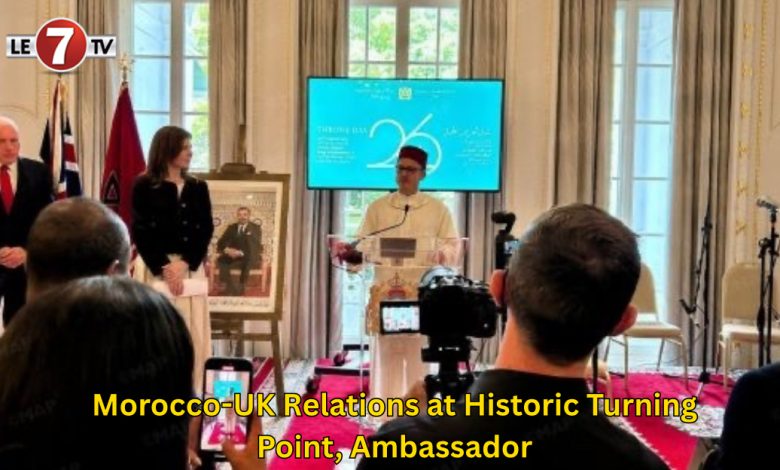
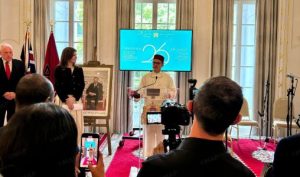

“This year’s celebration of the Glorious Throne Day comes at a special moment, marking a historic turning point in the long-standing relationship between Morocco and the United Kingdom,” the diplomat stated in a speech at a reception held by Morocco’s Embassy in London on the occasion of the 26th anniversary of the enthronement of HM King Mohammed VI.
Hajoui recalled that on June 1, 2025, the two Kingdoms entered “a new era of partnership, driven by a historic decision, namely the United Kingdom’s support for the Autonomy Plan as the most credible, realistic, and pragmatic basis for a lasting solution to the dispute over the Moroccan Sahara.”
The British support was welcomed by His Majesty the King in His Speech on the occasion of the Throne Day, in which the Sovereign expressed His thanks and appreciation to the United Kingdom, he noted.
“With this decision, the UK has spoken out in favor of stability, progress, and a better future for an entire region, with a shared commitment to working hand in hand toward a definitive resolution,” Hajoui continued.
He added that June 1, 2025, thus marks “a strong and significant step towards deeper cooperation between our two Kingdoms, particularly on global issues.”
Highlighting the strong and enduring ties between the two Illustrious Royal Families, Hajoui welcomed the promising prospects of the Morocco-UK partnership.
“The potential is immense, offering British companies, with their unrivalled expertise, a unique opportunity to take part in this growth journey,” he said, citing booming sectors such as tourism.
Under the leadership of His Majesty the King, Morocco is committed to sustainable growth and progress, with significant investments underway in strategic sectors such as energy, water, and health, the diplomat observed.
The ambassador also highlighted the role of the Moroccan community in the United Kingdom. “This new era of Moroccan-British partnership also belongs to you. As bridge builders, you have an essential role to play in shaping it,” he insisted.
Hajoui also pointed out that in a world marked by uncertainty, Morocco and the UK are called upon to deepen their cooperation, particularly in the Middle East, “where the two-state solution is the only viable path,” and in the Sahel region, where socio-economic development is key to security and stability.
This grand reception, held at a prestigious hotel in central London, was attended by Baroness Chapman, UK Minister for International Development, representing the British government, as well as Lord Coaker, Minister of State for Defense, and Ben Coleman, the Prime Minister’s Trade Envoy to Morocco and West Africa.
Several former British ministers, members of both houses of the UK Parliament, ambassadors, business leaders, academics, and think tank representatives also took part in the event, which included the screening of a film highlighting the history of Moroccan-British friendship, dating back to 1213, when King John of England approached Almohad Sultan Mohamed Ennassir to establish a strategic alliance with Morocco.
Editorial team/le7tv