Morocco–European Union Association Council: A strategic turning point in a partnership undergoing consolidation
The holding on Thursday, 29 January, of the Association Council between Morocco and the European Union marks a key moment in the evolution of relations between Rabat and Brussels. Far more than a routine institutional meeting, this gathering comes at a highly symbolic and political moment, illustrating a shared desire to consolidate a partnership that has become strategic for both sides.

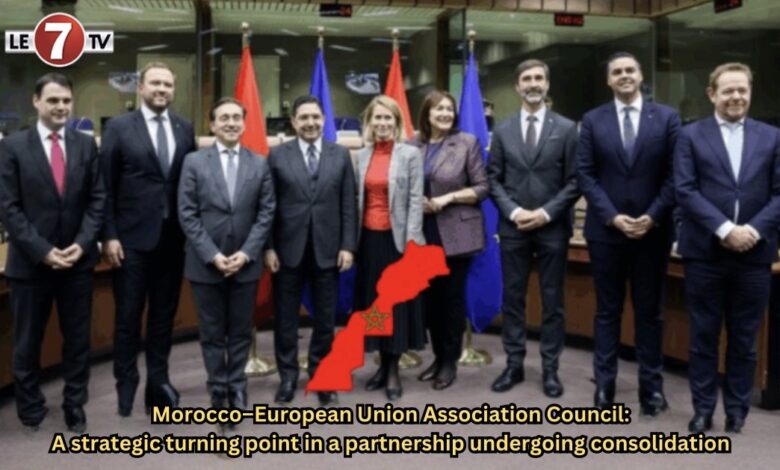
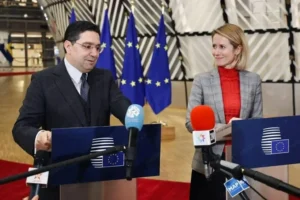
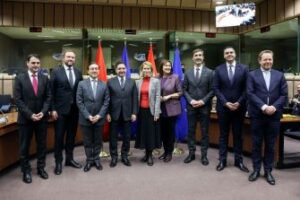
This Council takes place thirty years after the signing of the Association Agreement between Morocco and the European Union and six years after the last meeting of this kind, held in 2019. Its organisation in an international context marked by strong geopolitical and economic turbulence sends a clear signal of continuity and dialogue between the two partners.
European participation also reflects the importance attached to this relationship. In addition to the EU High Representative for Foreign Affairs, Kaja Kallas, the European Commissioner for the Mediterranean, Dubravka Šuica, as well as several European foreign ministers and senior EU officials took part in the proceedings. This mobilisation confirms that Morocco is viewed in Brussels not as a mere neighbour, but as a major partner.
The fact that this meeting was held immediately after the European Union Foreign Affairs Council further shows that issues related to Morocco are being addressed at the highest political level within the EU.
Beyond the official statements, this Association Council conveys several important political messages. First, it reflects the ability of the Morocco–EU partnership to withstand tensions and attempts at destabilisation. Despite controversies and pressures targeting certain components of cooperation, particularly in trade, both parties have maintained their collaboration, as evidenced by the implementation of the new agricultural agreement integrating the Southern Provinces within the framework of tariff preferences.
Secondly, the meeting marks a notable evolution in the European position on the Sahara issue. European Union member states are now displaying a more convergent stance around a realistic political solution, in line with United Nations resolutions, which represents a significant diplomatic development for Rabat.
This Council did not merely take stock of past achievements. It also opens the way for a new phase in bilateral cooperation. A regular high-level political dialogue is expected to be further structured, while a negotiation mandate has been launched to develop an in-depth strategic partnership covering key sectors such as security, investment, industry, digital development and the energy transition.
Morocco’s growing role as a stabilising actor in the Mediterranean, in Africa and across several international issues was also acknowledged, strengthening its position as a strategic partner for the European Union.
This Association Council highlights a reality that has become central: relations between Morocco and the European Union are now based on strategic interdependence.
The European Union sees Morocco as an essential partner for regional stability, security cooperation and the development of clean energy, while the Kingdom benefits from access to the European market, technology transfers and investment.
Despite the migration, trade and political crises experienced in recent years, the partnership has demonstrated its resilience, built on lasting shared interests and a long-term vision.
A partnership based on three pillars:
This relationship can be summed up as a strategic bridge resting on three pillars consolidated during this Council: an economic pillar, strengthened by trade agreements and investment; a security and stability pillar, based on political cooperation and the fight against common threats; and a political and diplomatic pillar, marked by increased convergence on several regional issues.
Within this framework, Morocco now appears as a central actor in this Euro-Mediterranean partnership, rather than merely a neighbour on the southern shore. The Association Council thus confirms that relations between Rabat and Brussels are entering a phase of strategic maturity, oriented towards broader and more structured cooperation in the years ahead.
Editorial team/le7tv