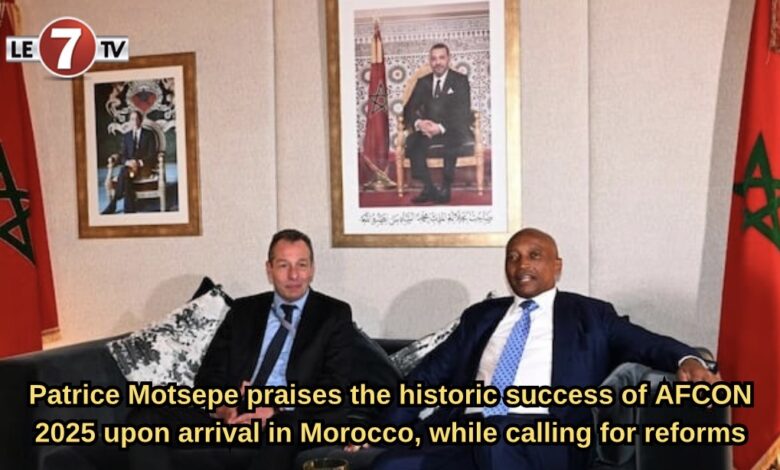
However, the CAF president expressed regret over what occurred during the final, noting that the continental body has begun introducing changes to its statutes and regulations, as well as to the specific rules governing the Africa Cup of Nations, in order to address the shortcomings identified and strengthen the credibility of African competitions.
“The AFCON regulations are based on FIFA’s, they are world-class regulations. But it is now clear that they must be changed,” he continued.
“Sanctions for violations of the rules must be exemplary. Our commitment to the rules is total. African football must be respected and must be globally competitive,” Motsepe concluded.
Motsepe acknowledged that certain incidents, particularly during the final, required thorough reflection. He announced the launch of reforms within CAF, including adjustments to its statutes and regulations to correct the identified shortcomings and reinforce the credibility of continental competitions.
For the record, on the day of the AFCON 2025 final, January 18, 2026, Senegalese players left the pitch at the Moulay Abdellah Complex in Rabat, following instructions from their head coach Pape Thiaw, to protest a refereeing decision awarding Morocco a penalty during stoppage time of the second half. The match was interrupted for approximately 16 minutes.
Senegal had initially won the tournament thanks to a goal by Pape Gueye in the 94th minute, before the final decision of CAF’s Appeals Committee, issued on March 17, completely altered the outcome.
These changes are expected to introduce more appropriate sanctions for violations, with the aim of ensuring fairness and respect for the rules. The stated objective is clear: to strengthen the image of African football as a disciplined, competitive and internationally respected sport.
The CAF president also stressed the importance of reinforcing trust in refereeing and disciplinary bodies, affirming the organization’s determination to continue its modernization efforts.
Finally, Patrice Motsepe recalled that football must remain a powerful vector of unity across the continent, calling for collective support from African nations for their teams qualified for the next World Cup, in order to represent Africa with pride on the global stage.
Translated from Abderrazzak Boussaid’s French article – le7tv