CAF Verdict: Patrice Motsepe Issues a Hollow, Polished Statement That Fails to Address the Core of the Problem
CAF President Patrice Motsepe today reaffirmed “CAF’s uncompromising determination to preserve and strengthen the integrity, reputation and global competitiveness of African football.”

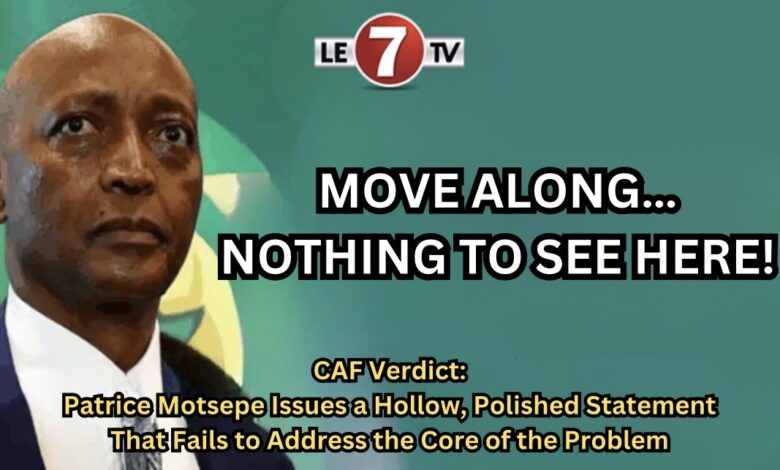
The statement published today by the CAF President on the CAF website, far from easing criticism, has instead reinforced the feeling of a deep disconnect between official discourse and the reality experienced on the ground.
In his message, the CAF President stresses his determination to defend the integrity and reputation of African football. He refers to the need to review regulations, promises additional resources for refereeing, and announces discussions within the Executive Committee.
However, on the central issue, namely the application of existing rules, no concrete element was provided. No explanation was given for the non-application of Article 82. No justification was offered for the leniency of the sanctions. No questioning of the verdict that was issued, yet widely contested.
In short, there are many institutional and diplomatic formulas, but no answers to the questions being asked by supporters, clubs and observers. For many, this discourse amounts to saying, “Move along, there is nothing to see here,” even though the entire continent witnessed what happened.
How can one speak of preserving the integrity of competitions when, at the same time, a team can leave the pitch during a final without facing the consequences provided for by the regulations? How can one defend the reputation of African football when security personnel are assaulted and sanctions remain merely symbolic? The problem is not the absence of regulations, but their selective application.
A Dangerous Precedent for African Competitions
Beyond the specific case of this final, the credibility of African competitions as a whole is now being weakened. If regulations are not enforced at critical moments, how can sporting fairness and respect for the rules be guaranteed in the future?
This decision sets a worrying precedent. Tomorrow, any team that believes it has suffered an refereeing injustice could be tempted to leave the pitch, knowing that the consequences might be limited to simple financial penalties.
African football is progressing on the international stage, attracting more investment and gaining global visibility. In this context, governing bodies should be sending strong signals in terms of discipline and accountability. This verdict, however, gives the opposite impression, suggesting that certain major offenses can be downplayed.
More than a passing controversy, this case raises a fundamental question: is CAF ready to enforce its own rules when the stakes are high?
Without a clear and consistent application of regulations, trust in continental competitions risks being eroded in a lasting way. This final will therefore remain marked not only by the incidents that occurred on the pitch and in the stands, but also by a scandalous disciplinary verdict and an equally scandalous official communication that continue to fuel anger and incomprehension in the world of African football and to seriously damage its image.
Translated from Abderrazzak Boussaid’s French article – le7tv